Showing posts with label eggs. Show all posts

Saturday, August 11, 2012

I Need Cheered Up! Plus, Egg Taste Test and Poultry Drama

I feel like I am not progressing very far in my preparedness efforts these days.

Our garden has been severely stunted by the unrelenting heat, drought, and insect pressure, so it hasn't produced nearly as much as it should. I'm thankful we are getting enough tomatoes to slice and eat on sandwiches, but my vision of massive amounts of canned tomato sauce is not to be this year. Most of the things that I was planning on freezing or canning have fried in our record-breaking heat. 

That's depressing. 

I also haven't bought a lot of preps because I spent my entire June-September prepping budget on items for the duck house build/chicken moat expansion. My Poultry Acquisition Disorder has definitely taken a toll on prepping. 

Sigh. Can somebody cheer me up and make me feel like I'm not a prepping loser? 

------

Alright, enough whining. 

The last time I blogged, I showed you all the first egg my dear little pullets laid. Not long after I completed that post, I cracked it open and compared our egg to a run-of-the-mill one from the grocery store. 
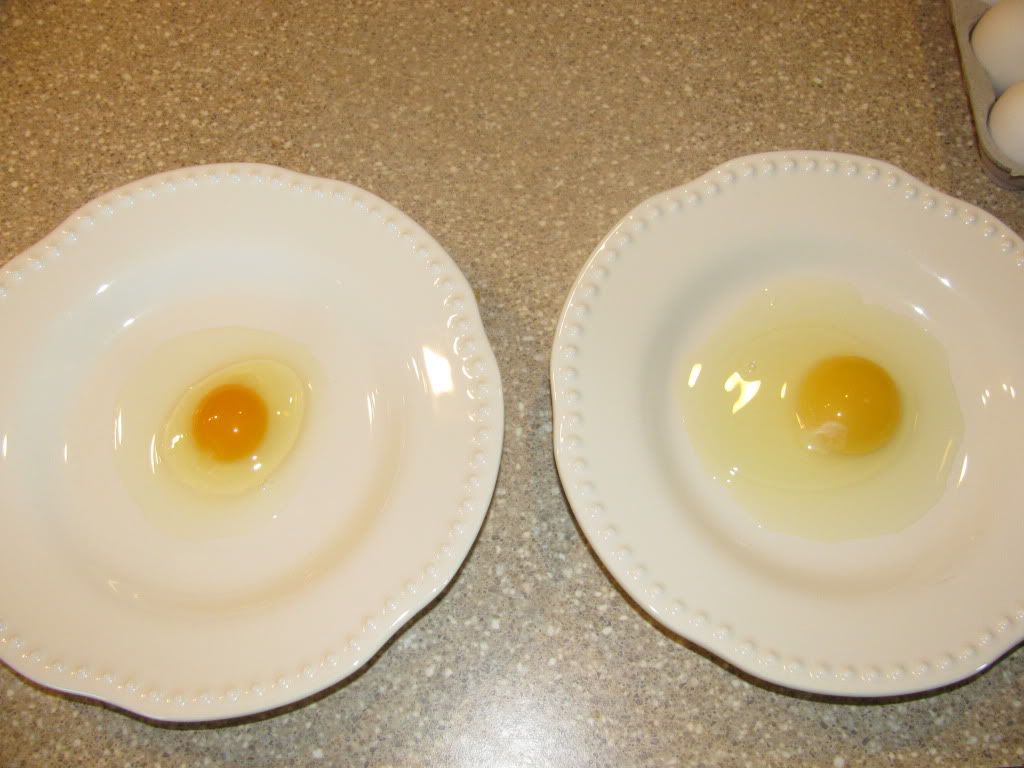
Our egg on the left, store egg on the right

Our egg was definitely smaller than the store-bought egg (1.3 oz vs. about 2 oz) but look at the difference in the color of the yolk and the firmness of the white! The store-bought egg is positively runny while our egg stands up nice and tall. 

I fried each egg separately and had the family do a taste test. Yes, all of us just had to sample that little bitty egg! The difference between the eggs was incredible. Our egg was so much more flavorful and almost buttery-tasting in and of itself. The store-bought egg was positively pallid in comparison, both in color and in flavor. 
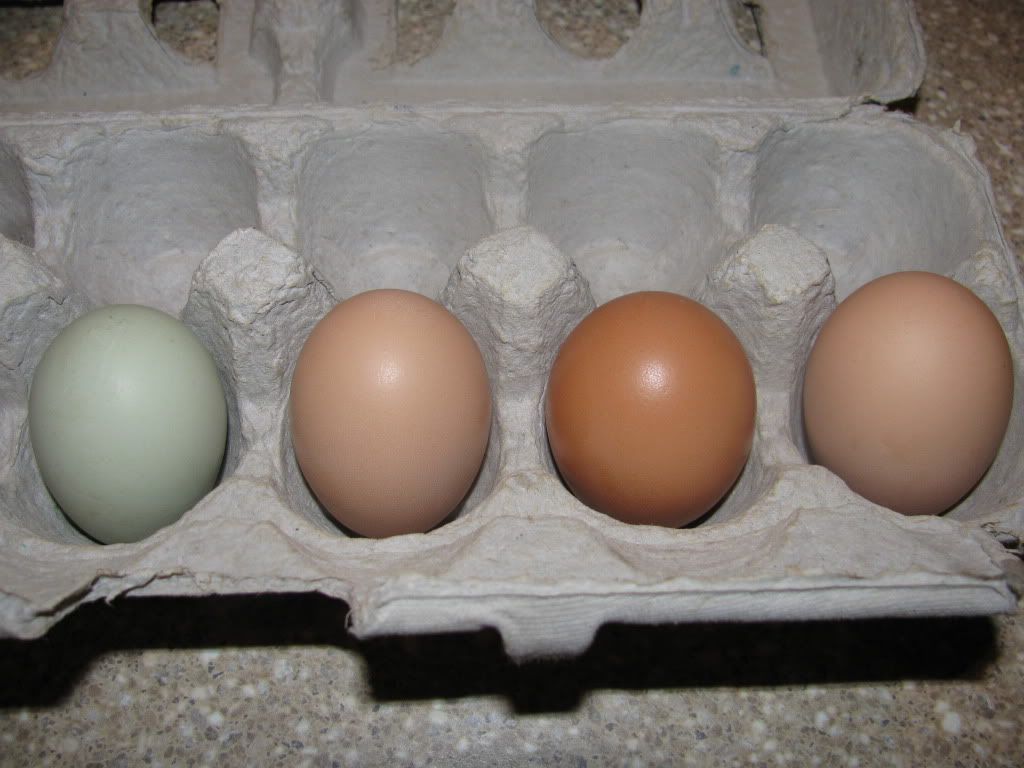

The eggs just keep coming!

Since that first day, we have been nearly swimming in eggs. My girls are currently averaging 8 eggs a day, which is plenty for us and some to give away. Hubby Dear has people at work asking for eggs, so we might end up selling a few dozen here and there, too. I also plan to explore other methods of egg preservation so that we will never run out of eggs during the winter months when production will slow down. 
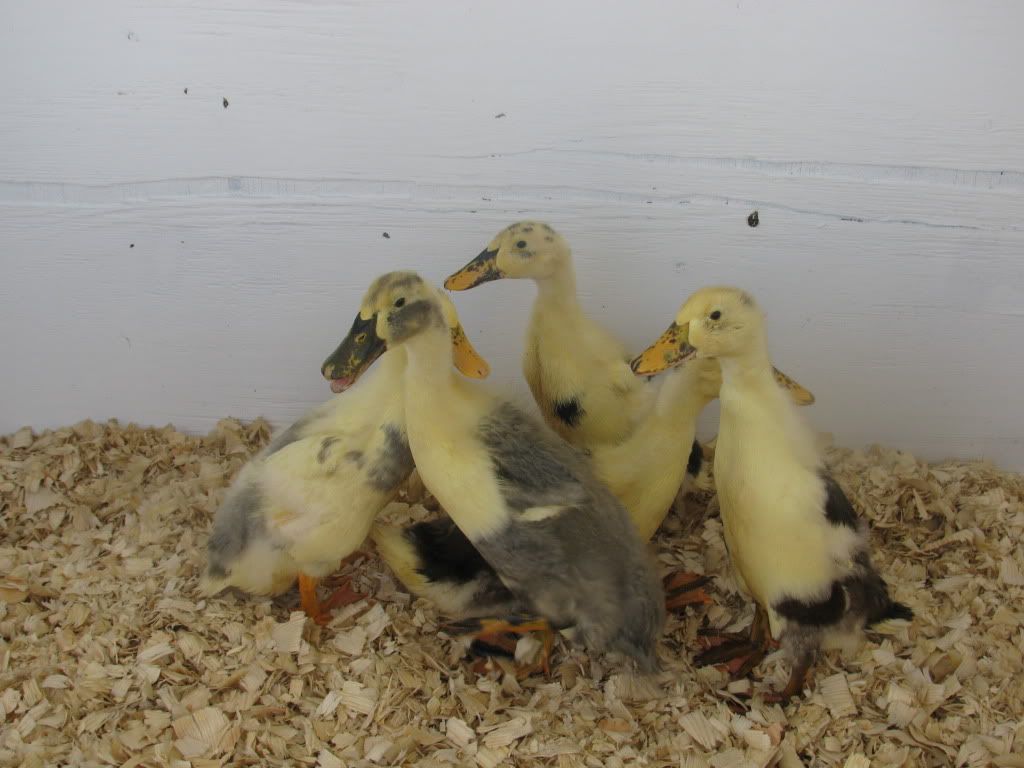


The ducks finally moved outside at four weeks of age

The same heat that destroyed my garden also prevented my five remaining ducklings (I gave away four to friends) from moving outdoors. I didn't spend 28 days nurturing these guys in an incubator only to have them fry in the 110 degree temperatures! The duck gurus I asked were very adamant that ducklings do not do well in such hot weather, so they stayed indoors for four weeks. Oh. my. word.  I can't even type out the horrors I had to clean out of that brooder in my bathroom. Finally I had enough and moved them outside one evening when it was "only" supposed to be in the upper nineties the next day. 

Ducks are creatures of habit and so the move scared them quite a bit. 
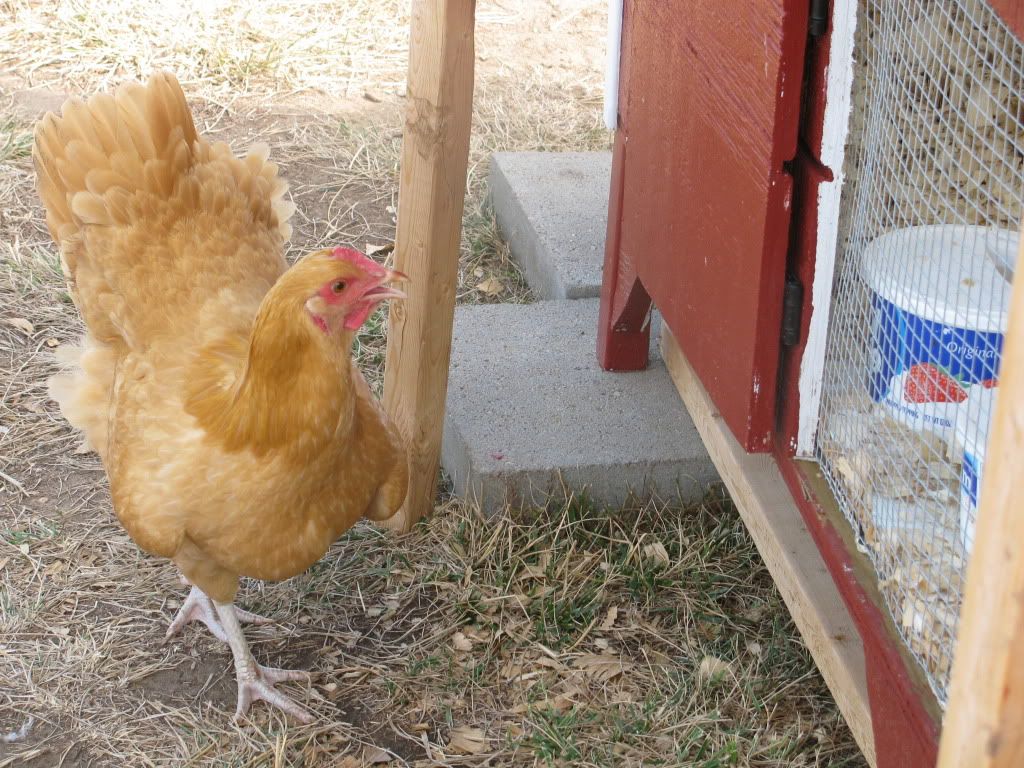

Goldilocks checking out her new neighbors

Plus, they now had nosy, loud neighbors who were very interested in everything the newcomers were up to. That would be intimidating to anyone. 


Puppy, Freckles, Morning Glory, Hyacinth, and Peek-a-Boo 

After a couple of days, the ducklings were having a ball making a mess in their new home. See how brown the grass is? We need rain desperately!
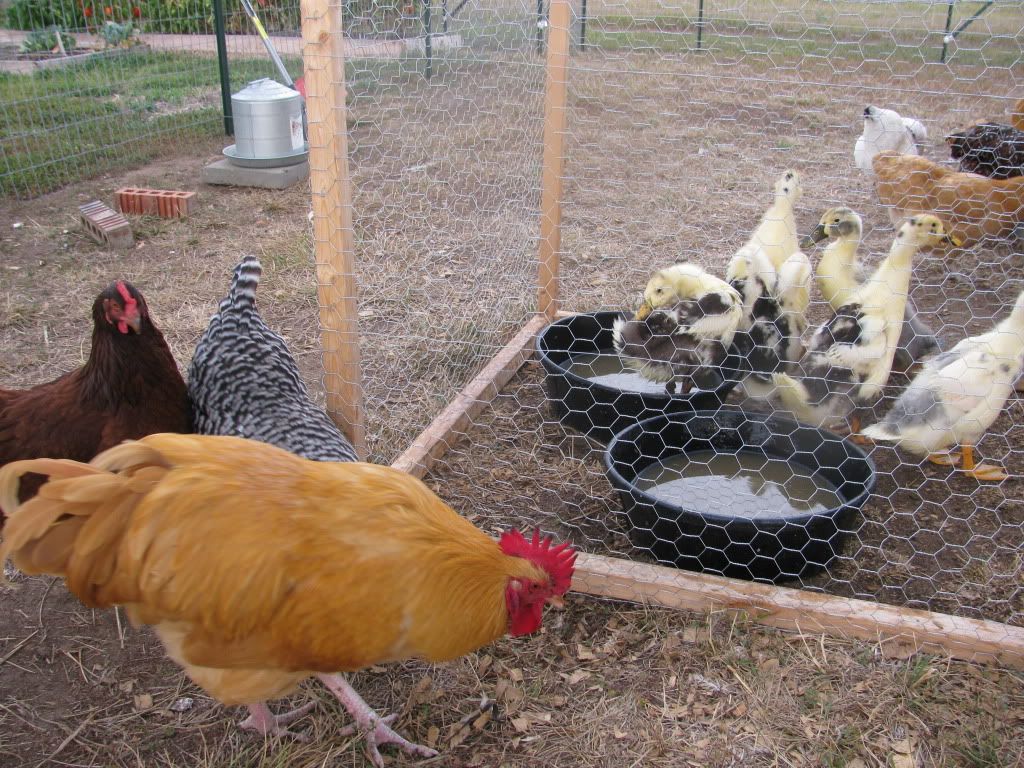
Will Doofenshmirtz be nice to the ducklings when the temporary pen gets removed next week?

Our rooster, Doofenshmirtz, is on probation. First, he was overly eager to mate with the pullets and would viciously attack them. He got that under control but then he started to attack my two oldest children when they came to collect eggs or visit the ducks. He does not mess with Hubby Dear or I, just the girls. 
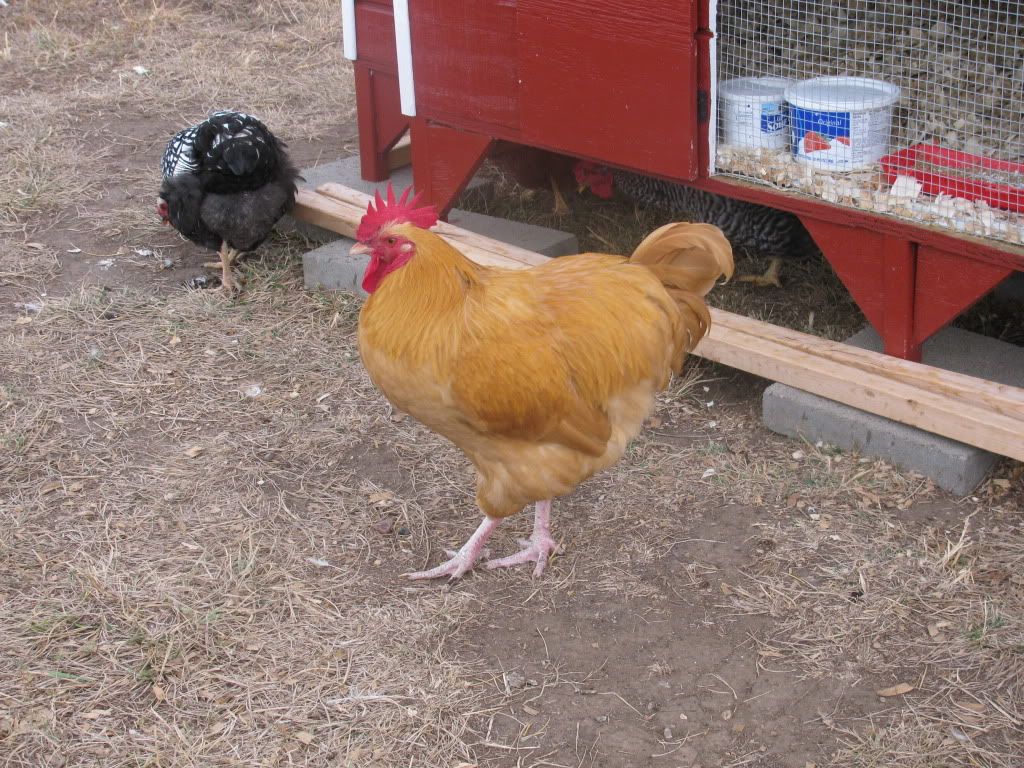

Handsome brute

We are seriously torn as to whether we should keep Doof or eat him. The farmers around here say that's just how roosters are. Since we want a rooster so that we can hatch our own chicks, that's what we have to deal with. But I also don't want to ruin the pleasure my children have in interacting with the chickens and ducks. Tough decision. 

I went ahead and ordered processing equipment in case we decide to eat the brute. We need to get killing cones, knives, and other butchering paraphernalia anyway because we are definitely eating the turkeys. 
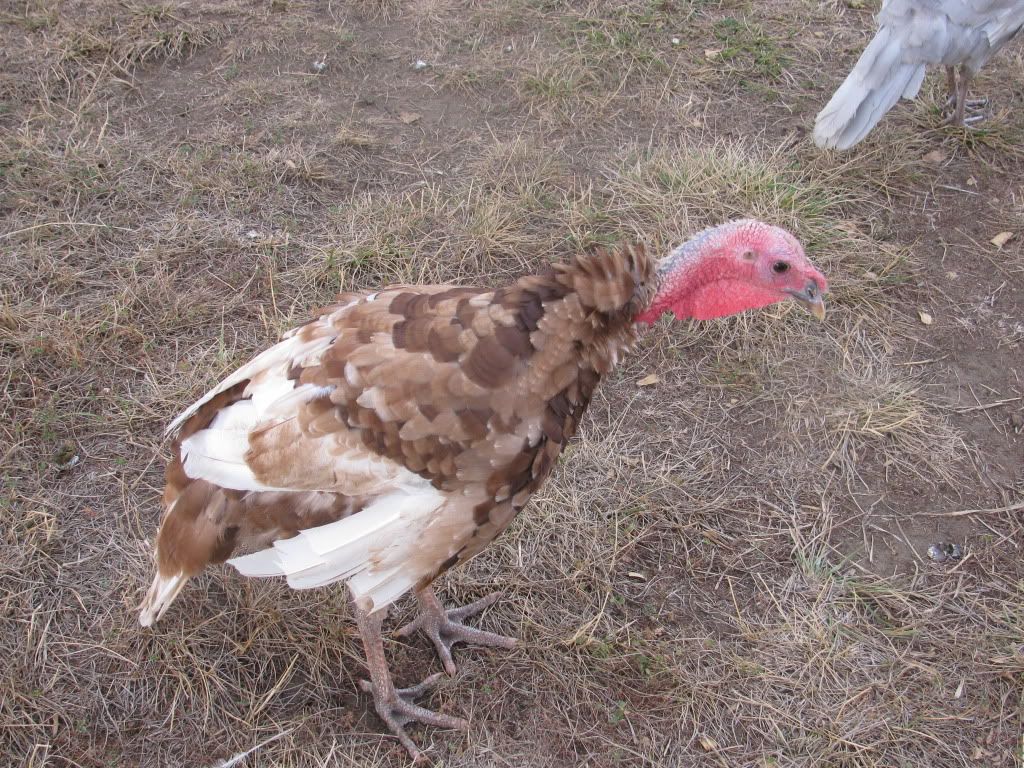

One of the Bourbon Red turkeys

Oh, the turkeys. We decided to try and house them with the chickens until butchering time. Since they are getting too big to get in the pop door (and are to ornery to do it themselves, anyway), every evening I get the joy of catching the beasts and throwing them into the chicken coop. They aren't too hard to catch, though they do shriek and kick their legs ineffectually when I pick them up. I won't miss that chore once they are gone. Picking them up every evening makes me keenly aware of just how much they need to grow before we butcher them. I feel like the witch in "Hansel and Gretel", feeling their keel bones every evening to see if they are fat enough yet to eat!  

Although it has definitely taken me a bit off course from my preparedness goals, I do so enjoy working with our livestock. I've even begun to dream about building a small barn with a brooder room, attached greenhouse, and room for a goat or two. 

Friday, February 10, 2012

The Perfect Survival Chicken: Selecting a Chicken Breed

This is part two of my chicken keeping series. Those of you who have been keeping chickens for years will have to excuse the new girl's giddy excitement. And please chime in with your own opinions in the comments!

If you missed part one, check it out here:
Part I: Peeps or Pullets? Ways to Get Started in Chicken Keeping

-------

Once I coerced Hubby Dear into the whole chicken keeping business and decided to start with chicks ordered through the mail, it was time to decide on a chicken breed. If you've never paid much attention to chickens before, it might surprise you to find out just how many breeds there are out there. The hatchery I settled on as the source for my chicks, Meyer Hatchery, carries literally dozens of breeds.

What should you buy? That depends on your answer to the following question: Why are you keeping chickens?
  • Are you mostly interested in eggs? There are breeds out there that will reliably pump out 300 eggs a year. 
  • Do you envision your chickens mostly as a meat source? You'll want to raise chickens that dress out into plump carcasses and put on weight quickly. 
  • Would you like chickens for both their meat and eggs? There are breeds that are good for both, though they will not produce as many eggs as the best layers or put on weight as fast as the dedicated meat birds. 
From a preparedness standpoint, it makes sense to choose a breed from the last category, the so-called dual purpose breeds. If you were facing a crisis of some kind that would definitely be the type of bird you would be interested in because they are so versatile. Here are some other considerations for those of us of the preparedness mindset:
  • Some breeds are better at foraging for their food than others. In the event that you have to completely free-range your chickens, it is important to select a breed that is active and does well outside of complete confinement. 
  • You'd want a breed that would go broody (attempt to hatch chicks on their own). We humans have removed broodiness from the genetic makeup of many poultry breeds. That's great if you want to create birds that lay continuously (broody birds stop laying and focus completely on their clutch of eggs), but that is not so good if you want to expand your flock naturally (ie. without an incubator or a hatchery order). It goes without saying that you'll need a rooster if you want fertile eggs. Chickens will lay eggs without a rooster, but it still takes a rooster strutting around the chicken yard to make babies. 
  • You would want a breed that agrees with your climate. Some chickens tolerate heat well; others are perky even in bitter cold. In a grid down situation, you're not going to be able to heat or cool your hen house artificially. And who wants to do that, anyway? Why not pick a breed that is suited to your climate and make it easy on everyone?

A last consideration has less to do with survival and more to do with you. What kind of personality do you feel comfortable working around? Some breeds are more flighty or have a history of aggression. Others are usually calm. Some breeds tend to be friendly and personable with their human caretakers while others couldn't care less about you.

After sifting through all these factors, we decided to select a dual-purpose breed that had known broody tendencies, does well free-ranging, handles cold weather and is generally docile. That still left me with many, many chicken breeds to pick from. In the end, I couldn't pick just one breed. I selected nine! We may decide later that a certain breed is our favorite and stick with it, but for now I can't help but smile in anticipation of the multi-colored display that will soon be pecking around my chicken moat.

These are the breeds we selected for our seventeen chickens:


Buff Orpington
Image from backyardchickens.com

Buff Orpington is the breed we ordered the most of. We want a rooster for our little flock and decided to purchase a Buff Orpington cockerel, too.


Black Australorp
Image from backyardchickens.com


Columbian Wyandotte
Image from http://chicksnchillens.blogspot.com


Golden Laced Wyandotte. Could they be any more spectacular?
Image from http://www.freewebs.com/djchooks/goldlacedwyandotte.htm


Silver Laced Wyandotte - too pretty to resist!
Image from mypetchicken.com


Easter Eggers
Image from redtractorranch.com

Easter Eggers are kind of an interesting breed. They are a bit of a mongrel breed that is kept primarily because they lay eggs in shades of green, blue, or pink. From what I've read, they vary on the outside just as much as the color of their eggs. Who knows if my girls will resemble the pullets pictured above?


Delaware - The Thinker's pick for prettiest chicken
Image from http://www.hobbyfarmliving.com/chicken-breeds-backyard-flock/


Speckled Sussex
Image from washingtonfeatherfanciers.webs.com


Barred Plymouth Rock
Image from Wikipedia


Any good book about chickens will have charts detailing the attributes of the various breeds. My favorite chicken reference for this purpose is  Storey's Guide to Raising Chickens. I found the hatchery websites to be very helpful, too.

If you raise chickens, what breeds do you have? Do you raise them primarily for eggs, meat, or both? If you don't have chickens but wish you did, what do you think you would do?