Hubby Dear and I have been going back and forth a lot on the subject of prepping. Honestly, it has descended into flat-out fights several times. Hubby Dear and I are the kind of couple that usually make people sick because we're so lovey-dovey even after over a decade of marriage, so that is very unusual. It was after one of those fights that I got all steamed up and emailed Dave Ramsey. Little did I know that I would quickly get a reply from Dave's producer, Lara Johnson, and actually talk with the man himself live on national radio.
In case you do not know who Dave Ramsey is, he is THE financial guru. His slogan says it all: "Debt is dumb, cash is king, and the paid-off home mortgage has taken the place of the BMW as the status symbol of choice". We have been following the Baby Steps as set out in his best-selling book, The Total Money Makeover, for over a year. I knew if anyone could solve this problem Hubby Dear and I have, it would be Dave.
When we put our problem before Dave, he was impressed to hear how much debt we had paid off in the last year. Lee told Dave that he didn't want to spend money on prepping until we paid off the remainder of our debt. Dave Ramsey told Lee that it would be fine to set a budget for prepping as long as we stick to it. Dave noted that preparedness obviously must be something important to me since I was willing to call in to a national radio show!
After he stated his opinion on our question, Dave asked me why I felt the need to, in his words, "store up a bunch of food in the basement". I briefly explained my reasons for prepping. Dave said he wasn't worried about ever having trouble feeding his kids, but said what did he know - he stocked up on certain kinds of ammo when Obama came into office.
Overall, I was very satisfied with the call, even though Dave isn't a prepper. Hubby Dear and I are finally on the same page with our budget and I get to spend money on prepping.
* By the way, they said our location as Kansas City. I'm proud that I was quick witted enough to give a phony location. I didn't break OPSEC! ;)
Monday, June 28, 2010


Friday, June 25, 2010
My Preparedness Binder, Parts Two and Three
In case you missed it, the first section of my Preparedness Binder is devoted to Food Storage and Preparedness Stocking Plans. I've collected bits and pieces of the collective wisdom of preppers on the Internet to come up with my own plan to buy food and supplies.
The second section in the binder is entitled "Food Storage Information". In this section I have general information about long term food storage.
The second section in the binder is entitled "Food Storage Information". In this section I have general information about long term food storage.
- Print offs from the LDS Preparedness Manual including :
-The Seven Major Mistakes in Food Storage
-Recommended Food Storage Shelf Lifes
-Growing and Using Sprouts
-Water Treatment
- Print offs of information from Food Storage Made Easy - water storage, grains, baking supplies, etc. This includes types of items to store, ideas on how to use them and shelf lifes.
- A handout from Everyday Food Storage about wheat
I intend to collect more information on how to use the items in our future long term food storage and put them in this section.
The last section of my binder is devoted to emergency and disaster information. The LDS Preparedness Manual was very helpful for this section as well. I included:
- A Preparedness Test (We failed!)
- Supply Table/Master Preparedness List
- Generator Info
- What to do in the case of biological or chemical agent dispersion
- Nuclear/Chemical decontamination kit and how-to
- A Shelter-in-Place diagram (I got this from Ready.gov)
- Nuclear Disaster and Warfare Info
I have also collected quite a few recipes that use food storage items. I plan to put together a binder for food storage recipes soon.
Speaking of food storage recipes, I have finally completed our three month food supply. Well, not the food itself, but the shopping list of what we need to have three months worth of shelf-stable food. I'll have to post our menu sometime. The Excel file from Food Storage Made Easy was essential and really made things so much easier.
It is a bit intimidating to realize just how much food and other items we need to store. 45 cans of Chicken Noodle Soup, 75 large cans of fruit and eight cases of toilet paper are among the highlights of the list. (Yes, we use a lot of toilet paper. It's pretty ridiculous.) I'll just keep chipping away at it and get there eventually.
Thursday, June 24, 2010
The Marriage Ref - Dave Ramsey!
Well, Hubby Dear and I still aren't seeing eye to eye on spending money on prepping. So I called in the big gun - Dave Ramsey! I'll be speaking to Dave on his radio show around 1 pm central time on Monday. We'll see whose side of the argument Dave falls on!
Wednesday, June 16, 2010
My Preparedness Binder
 I thought I would share more details and links from my preparedness binder. I have spent a couple of months compiling resources from all over the Web and you might find them to be helpful, too.
Today I'll go through the Food Storage/Preparedness Stocking Plans section. It contains lists and information about what to have on hand and various purchasing plans:
- A list of our frequently eaten meals and their ingredients. I also listed all of the non-food items we use - hygiene items, cleaning and paper products, etc. I used the Excel file from Food Storage Made Easy to develop an inventory and shopping list for our three month food supply.
- I also downloaded the Excel file from Food Storage Made Easy for long-term storage. I haven't gotten very far at all on long-term storage (I have fulfilled only our baking soda and salad dressing quotas!), but at least I know what I'm shooting for.
- If you don't have Excel, you can go to About.com and find the same long-term storage calculator. These suggestions are based upon the LDS (Mormon) church's recommendations for food storage.
- The three month supply list from http://www.everydayfoodstorage.net/
- My Prepping Plan, month by month. These are the items I am going to purchase and the actions we'll take.
- Another LDS resource, The LDS Preparedness Manual, has a TON of information. I printed off the pages having to do with food storage lists and a monthly food storage purchasing calendar for this section of my binder. We're not Mormon, but since the LDS church preaches preparedness, they have lots of resources that are useful for anyone wanting to develop their food storage.
- Print-outs of the Babysteps Checklists from Food Storage Made Easy. You can sign up for free bi-weekly emails that will guide you through developing your food storage over the course of a year.
- A copy of a handout by Wendy DeWitt. She has developed an easy system of food storage with recipes that use a solar oven. An excellent resource! You really get a good idea of how you could use your long-term food storage if the SHTF. There are also videos of her presentations on YouTube that fully explains her system.
Month Two Preps
Now that my Month One Preps are mostly complete (our van emergency kit is a glaring omission, I will admit), it's time to think about Month Two.
Month Two Preps:
Month Two Preps:
- Get $20 in small bills to add to BOBs.
- Continue to build our three month supply of food and other essentials.
- Reorganize our storage room. Clear out junk, donate unnecessary items and consolidate to make room for food and water storage.
- Buy Iosat tablets for the whole family.
- Buy items necessary to store 2 weeks worth of water for our family - barrels, siphon, water conditioner, etc.
- Fill water containers. Store appropriately in our cleared out storage room.
Month One Preps, Part Four: Three Month Supply of Food
In my last few posts I have tried to illustrate what I've accomplished during my first month of prepping. It doesn't feel like I've done very much because I see all of the shortcomings of my plans and I know how far I have yet to go. Plus there's the whole issue of my desire to spend money on preparedness vs. Hubby Dear's gazelle-intensity to pay off his vehicle. I'll wear him down yet, LOL!
The last item I have to discuss from my month one preps list is a three month supply of food. Basically, this is normal, everyday food, not designed for long-term storage. What do you eat regularly? You should store three months' worth of that food.
Some people include frozen foods in their three month supply. I'm kind of ambivalent about that. If I'm storing food for a minor emergency - job loss, quarantine, etc. - that is fine. But if the power goes out, a three months' supply of fresh or frozen food will quickly spoil.
In addition to food, it is recommended that you store up at least three months of non-food supplies. These are items like toilet paper, diapers and cleaning supplies. I have decided to go above and beyond these recommendations and build a year's supply of non-food items. The only exception to this is diapers. With two children in diapers, a year's supply would be HUGE. I could definitely get better about storing diapers and formula, though.
The best explanation of how to store three months of food is from the ladies at Food Storage Made Easy. You can read about it here. They have a wonderful Excel spreadsheet that helps you calculate just how much you need of any one item. It is also available as a print-out if you do not have Excel.
Another helpful resource is this Three Month Supply List from http://www.everydayfoodstorage.net/
Obviously I'm not going to be able to build up an entire three month's supply in one fell swoop. I am buying a few extra items each time I go to the store, however, and they will build up. I'm having a kind of hard time with this. We do not eat a lot of canned food besides beans and tomato products. My children are so used to eating only fresh or frozen vegetables that they refuse to eat canned veggies of any kind - even home canned green beans. It's taking some extra thought on my part to plan three months of shelf-stable meals we'll all enjoy.
And then there is the problem of where to store it all. But I'll tackle that in a future month.
Month One Summary:
1. Get Hubby Dear to back-up the computer
Status - Still need to do this.
2. Create emergency kits for both vehicles
Status - Hubby Dear's vehicle is complete. I need to figure out how to fit it
all in my van.
3. Make Bug Out Bags for our family
Status - Complete
4. Buy a large box of N-95 Masks
Status - Complete
5. Buy a crank flashlight/cell phone charger
Status - Complete
6. Create Emergency Binder and Preparedness Binder
Status - Complete, though I continue to find and print off useful articles for
my preparedness binder
7. Stock up on 3 Month Food Supply items
Status - In progress
8. Start saving cash and add to Bug Out Bags
Status - In progress. I've got a measely total of $34 at the moment and will
continue to add to it each month.
The last item I have to discuss from my month one preps list is a three month supply of food. Basically, this is normal, everyday food, not designed for long-term storage. What do you eat regularly? You should store three months' worth of that food.
Some people include frozen foods in their three month supply. I'm kind of ambivalent about that. If I'm storing food for a minor emergency - job loss, quarantine, etc. - that is fine. But if the power goes out, a three months' supply of fresh or frozen food will quickly spoil.
In addition to food, it is recommended that you store up at least three months of non-food supplies. These are items like toilet paper, diapers and cleaning supplies. I have decided to go above and beyond these recommendations and build a year's supply of non-food items. The only exception to this is diapers. With two children in diapers, a year's supply would be HUGE. I could definitely get better about storing diapers and formula, though.
The best explanation of how to store three months of food is from the ladies at Food Storage Made Easy. You can read about it here. They have a wonderful Excel spreadsheet that helps you calculate just how much you need of any one item. It is also available as a print-out if you do not have Excel.
Another helpful resource is this Three Month Supply List from http://www.everydayfoodstorage.net/
Obviously I'm not going to be able to build up an entire three month's supply in one fell swoop. I am buying a few extra items each time I go to the store, however, and they will build up. I'm having a kind of hard time with this. We do not eat a lot of canned food besides beans and tomato products. My children are so used to eating only fresh or frozen vegetables that they refuse to eat canned veggies of any kind - even home canned green beans. It's taking some extra thought on my part to plan three months of shelf-stable meals we'll all enjoy.
And then there is the problem of where to store it all. But I'll tackle that in a future month.
Month One Summary:
1. Get Hubby Dear to back-up the computer
Status - Still need to do this.
2. Create emergency kits for both vehicles
Status - Hubby Dear's vehicle is complete. I need to figure out how to fit it
all in my van.
3. Make Bug Out Bags for our family
Status - Complete
4. Buy a large box of N-95 Masks
Status - Complete
5. Buy a crank flashlight/cell phone charger
Status - Complete
6. Create Emergency Binder and Preparedness Binder
Status - Complete, though I continue to find and print off useful articles for
my preparedness binder
7. Stock up on 3 Month Food Supply items
Status - In progress
8. Start saving cash and add to Bug Out Bags
Status - In progress. I've got a measely total of $34 at the moment and will
continue to add to it each month.
Tuesday, June 8, 2010
Month One Preps, Part Three: Bug Out Bags
 I thought for a long time about the best way to assemble Bug Out Bags. Some lists you'll find out on the Internet are very much military inspired and list every component down to the type of heat you should be packing. I definitely will be investigating firearms at some point, but my inherent clumsiness and complete lack of experience precludes me from including them at this point.
I decided the easiest thing to do would be to order a prepackaged emergency kit and personalize it. My large order from Emergency Essentials (which also included the items for our Vehicle Emergency Kits) weighed over 70 pounds!

The emergency kit I ordered was their "Trekker IV", a mid-priced emergency kit for four people. Since we have six people in our family, I then ordered additional items such as rations, water, ponchos, etc. for another two people. I don't think that Baby Dear will be eating emergency rations for a while, but I wanted to have them on hand now rather than forget about it for the future.
 The kit includes two backpacks and you arrange the items in them as you desire. It really does include many items and covers the vast majority of the ones you will find on Bug Out Bag checklists.
The only weakness I really found was the multipurpose tool in the kit. I found it to be pretty flimsy in comparison to one we already have kicking around the house. I wouldn't want to have to depend on that tool for my survival. I'm planning on upgrading that at some point in the future.

One of the items I added to the kit was this flashlight/cell phone charger. If you crank it for 1 minute, the flashlight will work for 30 minutes. The cell phone charger could be really handy since our cell phones tend to run out of juice right when we need them.
 These are the emergency food rations the Trekker IV kit contains. Some of the more pricey kits Emergency Essential sells include MREs. That is something I may buy down the road, but for now these rations will do. They will keep us alive anyway. My oldest two children are begging to try them out.
I bought a box of 20 N-95 masks. These are good for preventing dust inhalation or infectious disease transmission. Hubby Dear is in the health care field and told me that if you have facial hair, it is nearly impossible t
 o get a N-95 mask to fit correctly, which is something to remember. During the Swine Flu epidemic, he was unable to wear one over his beard at work. Nonetheless, these are important to have on hand.
 The final addition to our BOB was my emergency binder, which I explained in this post. It contains all the information we would want to have on hand if we hand to evacuate in a hurry - family phone numbers, insurance information, etc.
The two backpacks that make up our primarily emergency kits are very heavy. None of our children could possibly carry them and they would wear me out in a hurry. I guess I had better start lifting weights!
I made another backpack that contains diapers for Sweetie Pie and Baby Dear as well as formula. That backpack could be carried by either of our two oldest children. There are two other backpacks that contain changes of clothing and shoes for our entire family.
Finally, I am building up a store of cash to carry in the BOBs. I've started our stash with the $30 we were paid for being a Nielsen family. Each month I intend to add to the cash using small denominations only. Right now I'm planning on putting about $200 in the BOBs and storing additional cash our safe. Eventually I'd like to have around $1,000 in cash stored at home. We already have a substantial emergency fund in the bank, but if SHTF that may not be accessible.
So that's our Bug Out Bags.
Month One Preps, Part Two: Vehicle Emergency Kits
 Having survival supplies in your vehicle is important. Hubby Dear works long hours at work and would likely be away from home should an emergency occur. I am home with our four offspring most of the time, but with my luck I'd be at a ballgame or at the local megamart when SHTF.
 I bought a few items from Emergency Essentials to throw in the back of Hubby Dear's vehicle. They should enable him to make it home on foot or survive in his car for a while. 99% of the time he is alone in his car, so I only included enough supplies for one person.
Contained an a plastic tub:
- Aqua Literz - Enough water for one person
 for one day. I have read reports that bottled water isn't safe to store in hot vehicles, but this boxed water should be OK.
 - Premier Bottled Emergency Kit - Packed in a water bottle, it contains many different survival items including a poncho, water purification tablets, first aid kit, etc.
- Emergency Road Side Kit - Jumper cables, tools, etc. My one complaint about this product is that the plastic container it is housed in is pretty flimsy.
- Tri-fold shovel - A shovel could be handy in an emergency. There were times this past winter that Hubby Dear really could have used one.
- Some Millennium bars - 400 kcal each, these food bars last up to 5 years and can stand the heat of a vehicle during summer.

I also want to make a more extensive emergency kit for our family mini-van. I went ahead and bought a shovel and Emergency Roadside Kit. The problem I'm encountering is that our family fills up our vehicle already. Add in a typical load of groceries and I simply don't have room for an emergency kit. I'd like to store items under the seats, but nothing will fit underneath there. I'm still thinking of the solution to this problem and welcome ideas.
Monday, May 31, 2010
Love and the Married Prepper
Hubby Dear and I have been together quite a while and we rarely disagree over much of consequence. My new preparedness "obsession", however, is another story.
I'll admit it - I can have a pretty anxious personality. I am a glass-is-half-full, anything-that-can-go-wrong-will-go-wrong kind of gal. Hubby Dear thinks "prepping" is just another one of my neuroses and that I should just chill out and stop worrying.
The other facet of his argument is that we are working hard at becoming debt free. We have paid off something like $50,000 in the last year. Our only remaining debt is a lease we have on Hubby Dear's vehicle, and we are saving up the money to pay that off this fall. I agree that getting debt free is really important. Heck, that would count as financial preparedness, wouldn't it?
The problem is that Hubby Dear doesn't want to spend money that I thought we had budgeted for prepping. He'd rather put it towards paying off his vehicle. Here's how I see it: if we spend the money to prep, it will delay paying off his vehicle for a month at the most. If SHTF between now and then, however, those few months I was able to prepare might make the difference between survival and, well, not surviving.
Hubby Dear just doesn't think the SHTF will occur. I hope he's right. In the meantime, we'll be prepping. I used a little bit of wifely persuasion to help him see my way. After all, a happy wife equals a happy life! ;)
I'll admit it - I can have a pretty anxious personality. I am a glass-is-half-full, anything-that-can-go-wrong-will-go-wrong kind of gal. Hubby Dear thinks "prepping" is just another one of my neuroses and that I should just chill out and stop worrying.
The other facet of his argument is that we are working hard at becoming debt free. We have paid off something like $50,000 in the last year. Our only remaining debt is a lease we have on Hubby Dear's vehicle, and we are saving up the money to pay that off this fall. I agree that getting debt free is really important. Heck, that would count as financial preparedness, wouldn't it?
The problem is that Hubby Dear doesn't want to spend money that I thought we had budgeted for prepping. He'd rather put it towards paying off his vehicle. Here's how I see it: if we spend the money to prep, it will delay paying off his vehicle for a month at the most. If SHTF between now and then, however, those few months I was able to prepare might make the difference between survival and, well, not surviving.
Hubby Dear just doesn't think the SHTF will occur. I hope he's right. In the meantime, we'll be prepping. I used a little bit of wifely persuasion to help him see my way. After all, a happy wife equals a happy life! ;)
My Month One Preps, Part One: Data Backup
In a past entry I posted the list of items I selected to do/buy during my first month of prepping. I've accomplished most of these, but I still have a few odds and ends to clear up.
- Get Hubby Dear to back-up the computer
- We have one desktop computer that has files from the last 12+ years. It would be heartbreaking to lose all of the photos we've taken of our children.
- I have basic computer skills, but I've never backed-up a computer before. Since Hubby Dear doesn't feel the need to get prepared, I need to either ask him very nicely (perhaps with a bit more of that wifely persuasion!) or subscribe to an online backup service like Mozy. I could probably accomplish that on my own.
2. Create Emergency Binder and Preparedness Binder
- Another form of data backup is my emergency and preparedness binders. We live in the country and have some strange sort of Internet service that frequently goes out in bad weather. If the power goes out or our Internet goes down, all those bookmarks I've collected are useless. I've started printing off useful survival information and placing it in my preparedness binder. Additionally, there is some information that is vital to have if you have to evacuate - SS #, family phone numbers, insurance information, etc. Having this readily at hand in an emergency could literally be a life-saver.
----EMERGENCY BINDER:
- I used the information from Food Storage Made Easy to create my initial emergency binder. Signing up for their Baby Steps Checklist was one of the first things I did when I started thinking about preparedness.
- Then I read this post from The Survival Mom on Grab and Go Binders. Her post is excellent! She has a very detailed list of items you need in an emergency binder.
- Over the course of a couple of weekends, I gathered all the paperwork I needed and made photocopies. I inserted them into plastic page protectors and them stuck them into my binder. The binder is organized into financial, personal, and medical sections.
----PREPAREDNESS BINDER
- I didn't have an example to follow for this. I divided a binder into three sections: Food Storage/Preparedness Stocking Plans, Food Storage Information and Emergency/Disaster Information.
- FOOD STORAGE/PREPAREDNESS STOCKING PLANS SECTION:
- My Prepping Plan
- A list of our frequently eaten meals and then all of the ingredients I need for those. (This is used for our 3 month meal supply - the subject of a future post.)
- A print-off of the results of this food storage calculator
- Print-offs of the Food Storage Made Easy Baby Steps Checklists
- Some other food storage information from other websites.
2. FOOD STORAGE INFORMATION SECTION:
- I have printed off a bunch of information about water purification, the shelf lifes of various foods, etc.
3. EMERGENCY/DISASTER INFORMATION:
- This section includes print-offs on what to do in case of a nuclear disaster, chemical spill, etc.
I'll give more information and links to the various resources I've collected in future posts.
Saturday, May 29, 2010
My Month One Preps
As I discussed in my previous post, I prioritized the purchases our family needed to make and created a 12 month plan and budget. Here are our Month One Preps:
My Month One Preps
My Month One Preps
- Get Hubby Dear to back-up the computer
- Create emergency kits for both vehicles
- Make Bug Out Bags for our family
- Buy a large box of N-95 Masks
- Buy a crank flashlight/cell phone charger
- Create Emergency Binder and Preparedness Binder
- Stock up on 3 Month Food Supply items
- Start saving cash and add to Bug Out Bags
Over the next few posts I am going to give details about what I did to fulfill every item on this list.
With so much to prepare for, where do I start?
When I decided that I needed to take our family's preparedness seriously, I began to get overwhelmed. When you think of all that can go wrong and how much stuff you need to get ready for every scenario, it really is quite intimidating.
Then I read a great post on the Survival Cache blog. You can read it here, and I suggest that you do, but the gist of it is that you should divide your preparedness planning into phases. First prepare for emergencies that are of short duration. An example of that is a chemical spill near your house that requires you to quickly evacuate your family until the danger is past. Or maybe there is a heavy snow storm and you have to make do with what you have on hand for a few days. Once you have that taken care of, you should gradually move on to preparing for emergencies of longer and longer duration until you are prepared for true long-term survival. The Survival Cache guys came up with this clever visual illustration of the concept like the food pyramid:

Then I read a great post on the Survival Cache blog. You can read it here, and I suggest that you do, but the gist of it is that you should divide your preparedness planning into phases. First prepare for emergencies that are of short duration. An example of that is a chemical spill near your house that requires you to quickly evacuate your family until the danger is past. Or maybe there is a heavy snow storm and you have to make do with what you have on hand for a few days. Once you have that taken care of, you should gradually move on to preparing for emergencies of longer and longer duration until you are prepared for true long-term survival. The Survival Cache guys came up with this clever visual illustration of the concept like the food pyramid:
With this in mind (and some tweeking of my own), I have made a tentative plan for the next year. I've budgeted about $300 towards each month's preparedness purchases. This will take us a long way towards my goal of preparing our family for whatever may come.
Go visit The Survival Cache site! It's got tons of great information that even a newbie like myself can understand.
Coming Soon: My Month One Preps
Thursday, May 27, 2010
Prepping and History
- George Santayana
I don't know who George Santayana is or was, but he sure gets quoted often. The reason for that, of course is that George Santayana was right.
I think history is fascinating and have studied it much of my life but it wasn't until recently that I started thinking about the implications of history when it comes to prepping.
One thing I've been ruminating on is the fact that there is not one civilization that has managed to prosper throughout the entire scope of human history. The Sumerians, Babylonians, Persians, Ancient Egyptians, Romans? All Gone. Every other ancient or even more recent civilization or empire that you ever learned about in history class? Toast. Parts of the cultures may remain, but through wars (international or civil), famine, plague, natural disaster, social strife or whatnot, there is not one civilization that remains unscathed. You maybe could make a case for the Chinese, who have many years of history. Chairman Mao and the Communist Revolution created enough upheaval, however, that I think you can count them out as well.
Our own country is young. Our 200+ years of history still qualifies us as the new kid on the block. For the moment we are dominant, but how long will that last? I am not arrogant enough to assume that the fate that befell those who came before us will not happen to us.
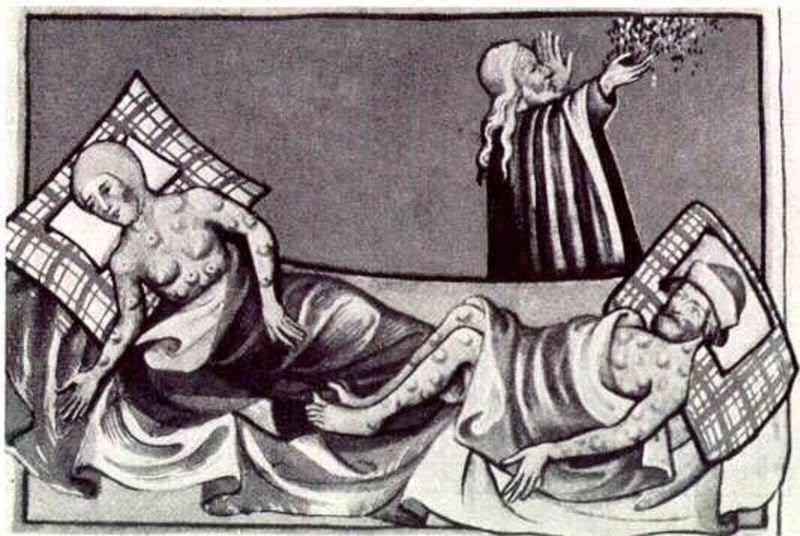
Today I was flipping through the channels and stopped at a show called "The Plague" on the History Channel. It was about the bubonic plague that ravaged much of the known world during the 1300s. Not only did it kill off a huge number of people (I've read estimates of anywhere between 25-50% of the population of Europe died), but it also had a lingering effect on the people who lived through it. Tremendous social upheaval followed. B
Hundreds of years may have passed since The Plague, but our society remains vulnerable to a similar situation. Today we are so dependent on technology and removed from making our living off the land that if we had to start our civilization back over at zero, most of us would not make it. The average American simply does not have the skill set needed to survive. If we listen to the lesson of history, we'll recognize we need to change.
It's not a matter of IF it will happen. It's a matter of WHAT will happen WHEN.
Questions from a child
We got a delivery from Fed-Ex this morning that included many of the elements that are going into our bug out bags (more on those in a future post). My oldest child, The Thinker, was confused.
"Mom, if you and Dad have been married such a long time, why are you just now getting this emergency stuff? Shouldn't you have all of this already?"
I had to answer honestly - we hadn't really thought about being prepared for emergencies until recently. Hopefully prepping will become such an ingrained part of our family culture that when our children go off on their own they will naturally do it. They shouldn't be married for over a decade before they get their act together.
Off to make our bug out bags...
"Mom, if you and Dad have been married such a long time, why are you just now getting this emergency stuff? Shouldn't you have all of this already?"
I had to answer honestly - we hadn't really thought about being prepared for emergencies until recently. Hopefully prepping will become such an ingrained part of our family culture that when our children go off on their own they will naturally do it. They shouldn't be married for over a decade before they get their act together.
Off to make our bug out bags...
Wednesday, May 26, 2010
What is Prepping?
Prepping is taking the Boy Scout motto of "Be Prepared" and running with it. The ultimate prepper is one who will be able to respond to and survive in any of a number of situations - earthquake, hurricane, economic meltdown, terrorist attack, etc. In other words, when the you-know-what hits the fan (SHTF, an acronym you'll see a lot on Prepper sites. Also, TEOTWAWKI - the end of the world as we know it), Preppers will be prepared. Everybody else will have to rely on the Federal government. Ask the people of New Orleans how well that works out.
A prepper should not just have a bunch of camping equipment "just in case". Most preppers that I have read about think that survival knowledge is just as important as the having right kind of gear.
How is this different from being a "survivalist"? My understanding of the difference has to do with the extreme measures survivalists usually take. Whereas most preppers blend into society, survivalists tend to make preparedness their complete lifestyle with living off the grid the goal. I'm sure that is pretty simplistic and a matter of debate, but that's how I understand the difference.
Why am I prepping?
I hadn't really thought much about emergency preparedness until late in my fourth pregnancy when I felt the urge to prepare my family for... something. Nothing in particular sparked my concern, I just felt the nudge to prepare. Maybe it was pregnancy hormones, but I tend to think it was the leading of the Holy Spirit.
I have a family that I love dearly and four little souls that depend entirely upon the care that Hubby Dear and I give them. My house and vehicles are valuable, therefore I insure them. It is unlikely that my house will be consumed in a fire or that my car will be totalled in an accident, but I have the insurance on standby so that I can replace them if the unthinkable occurs. How much more precious are the lives of my children? Why would I not do all that I can to insure those lives?
Preparedness seems daunting and there is a lot I have to learn, but I am slowly taking the measures I need to prepare my family for what the future may hold.
A prepper should not just have a bunch of camping equipment "just in case". Most preppers that I have read about think that survival knowledge is just as important as the having right kind of gear.
How is this different from being a "survivalist"? My understanding of the difference has to do with the extreme measures survivalists usually take. Whereas most preppers blend into society, survivalists tend to make preparedness their complete lifestyle with living off the grid the goal. I'm sure that is pretty simplistic and a matter of debate, but that's how I understand the difference.
Why am I prepping?
I hadn't really thought much about emergency preparedness until late in my fourth pregnancy when I felt the urge to prepare my family for... something. Nothing in particular sparked my concern, I just felt the nudge to prepare. Maybe it was pregnancy hormones, but I tend to think it was the leading of the Holy Spirit.
I have a family that I love dearly and four little souls that depend entirely upon the care that Hubby Dear and I give them. My house and vehicles are valuable, therefore I insure them. It is unlikely that my house will be consumed in a fire or that my car will be totalled in an accident, but I have the insurance on standby so that I can replace them if the unthinkable occurs. How much more precious are the lives of my children? Why would I not do all that I can to insure those lives?
Preparedness seems daunting and there is a lot I have to learn, but I am slowly taking the measures I need to prepare my family for what the future may hold.
Who is "The Harried Homemaker"?
Who am I?
My name is Emily. I live in the Midwest with Hubby Dear and four children ranging in age from early elementary school to infant. I have earned the title "harried" the hard way. I not only take care of the business of our home, but I also homeschool our children, one of whom has special needs.
I started this blog because I recently started "prepping" and want to blog about it. (Duh!) ;)
I already have another blog where I discuss the events going on in my crazy family, but I decided to start this anonymous one just about prepping. Why is that, you might ask? Well, one good reason is that many more experienced preppers say it is best not to advertise the fact that you prepare to the public at large. I think that is wise advice. If there is ever a situation where SHTF (more about that later), the low-life scum who know you have a large amount of survival goods might decide to come and forcibly take it away from you. If you don't think that will happen in a SHTF scenario, where have you been recently?
The other reason I have chosen to remain anonymous on this blog is because when it comes to matters of survival, I am completely helpless. Those near and dear to me are very aware of that and would be in complete disbelief that I have decided to get into prepping. Quite honestly, I don't care to hear their opinions on the subject.
I am more known for my academic bent rather than my physical prowess. My midsection closely resembles a marshmallow. I've given birth to four children, don'tcha know! I freak out at the thought of having a mouse, much less a deadly weapon like a shotgun, in my house. I also think air conditioning and Diet Coke are necessities of life. But I'm determined to change my wimpiness and this blog will chronicle the journey.
Exactly what is "Prepping" and why am I doing it?
That is the subject for my next entry.
My name is Emily. I live in the Midwest with Hubby Dear and four children ranging in age from early elementary school to infant. I have earned the title "harried" the hard way. I not only take care of the business of our home, but I also homeschool our children, one of whom has special needs.
I started this blog because I recently started "prepping" and want to blog about it. (Duh!) ;)
I already have another blog where I discuss the events going on in my crazy family, but I decided to start this anonymous one just about prepping. Why is that, you might ask? Well, one good reason is that many more experienced preppers say it is best not to advertise the fact that you prepare to the public at large. I think that is wise advice. If there is ever a situation where SHTF (more about that later), the low-life scum who know you have a large amount of survival goods might decide to come and forcibly take it away from you. If you don't think that will happen in a SHTF scenario, where have you been recently?
The other reason I have chosen to remain anonymous on this blog is because when it comes to matters of survival, I am completely helpless. Those near and dear to me are very aware of that and would be in complete disbelief that I have decided to get into prepping. Quite honestly, I don't care to hear their opinions on the subject.
I am more known for my academic bent rather than my physical prowess. My midsection closely resembles a marshmallow. I've given birth to four children, don'tcha know! I freak out at the thought of having a mouse, much less a deadly weapon like a shotgun, in my house. I also think air conditioning and Diet Coke are necessities of life. But I'm determined to change my wimpiness and this blog will chronicle the journey.
Exactly what is "Prepping" and why am I doing it?
That is the subject for my next entry.
Subscribe to:
Posts (Atom)


 Posts
Posts