Showing posts with label pecan trees. Show all posts

Thursday, June 21, 2012

Mid-June Garden and Orchard Update

It's been a while since I did a garden update, so I thought I'd share what's going on. 

Unfortunately, May was extremely hot and dry here, which caused our cold weather crops like peas, lettuce, and spinach to die prematurely.  If it's not one thing, it's another. 

Our garden on June 18. It's looking bare since so much has been harvested or pulled out. 

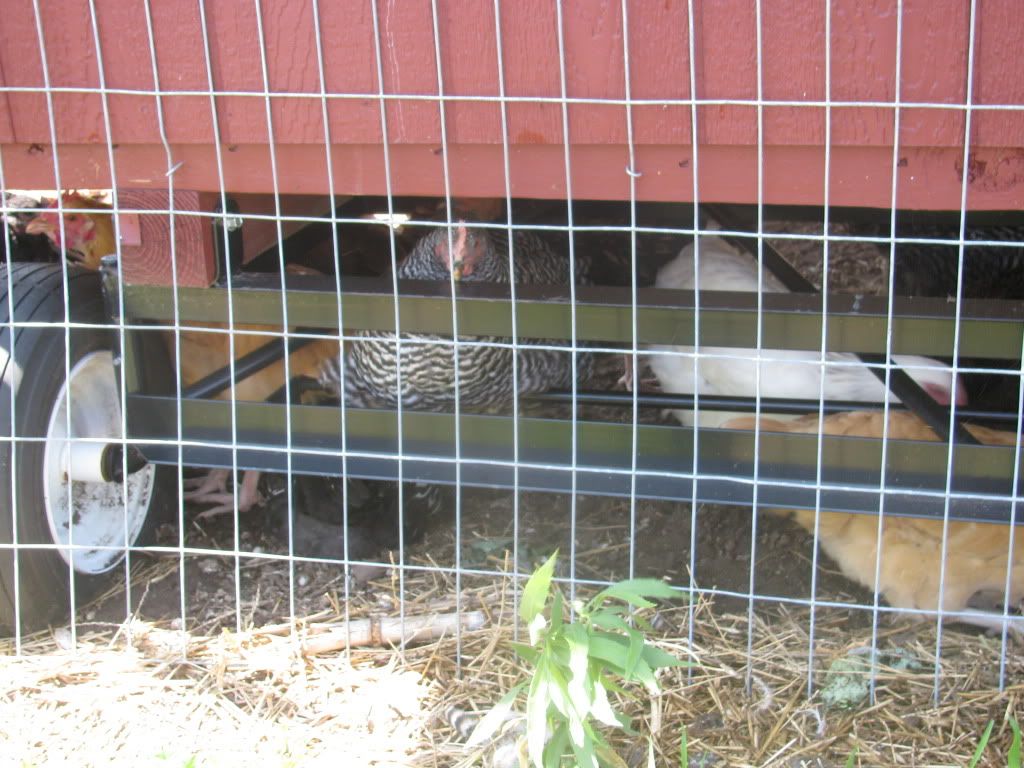
The chickens have the right idea. 

The chickens spend the hot part of the day underneath their coop. 

When it's hot like this, it's best to just stay in the shade! I've been spritzing their run with the hose a couple of times a day and putting ice cubes in their water. They seem to be weathering the heat well. Hopefully by this time next month I'll be getting eggs from my lovely ladies! 
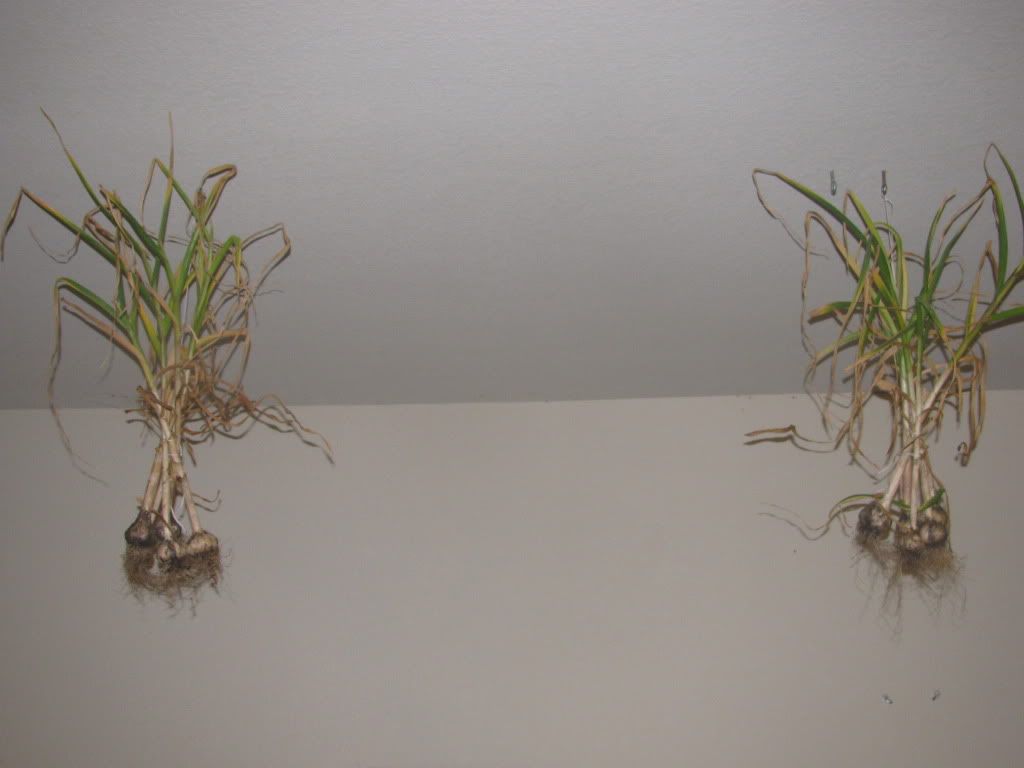

Drying garlic

We harvested around 40 heads of garlic. We gathered them into bunches of five or six heads and have suspended them in our garage to dry for a month or so. Once they are dry, I'll cut them off their stalk - we grew 'Music', a type of hard-neck garlic - and put them into storage. I plan to save our best heads back to use as seed garlic for next year's crop. I am also going to try dehydrating garlic in my Excaliburand grind my own garlic powder.

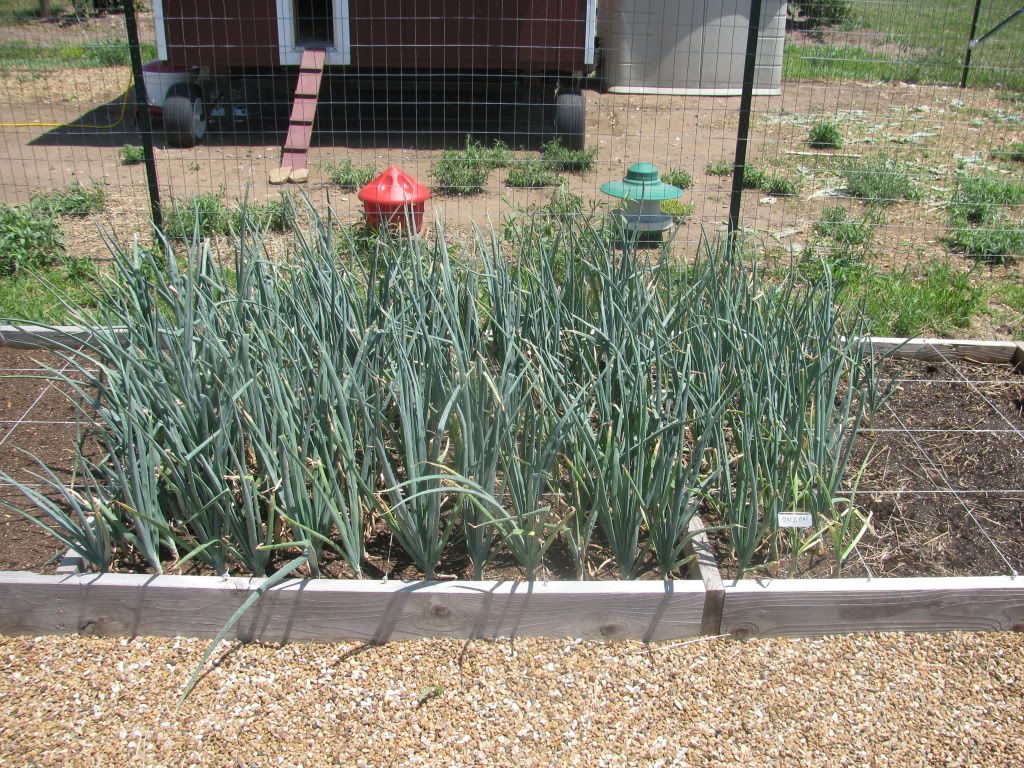
'Copra' onions

The onions are doing well and will probably do even better now that the garlic is gone. Our garlic plants were three feet tall and were shading them.
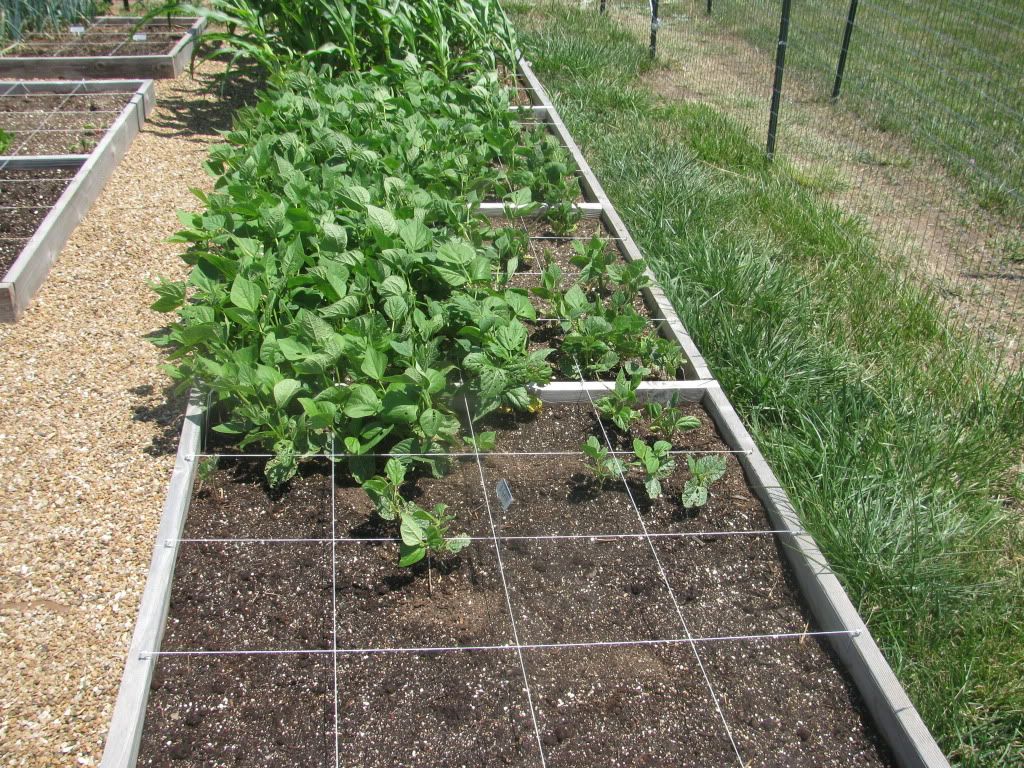

Our green beans had spotty germination

Our green beans had spotty germination, as did our carrots, cucumbers, watermelon, zucchini, and cantaloupe. We replanted the bare spots. We also planted extra vine plants in the space vacated by the peas. We will soon have a riotous mess in those bare areas!
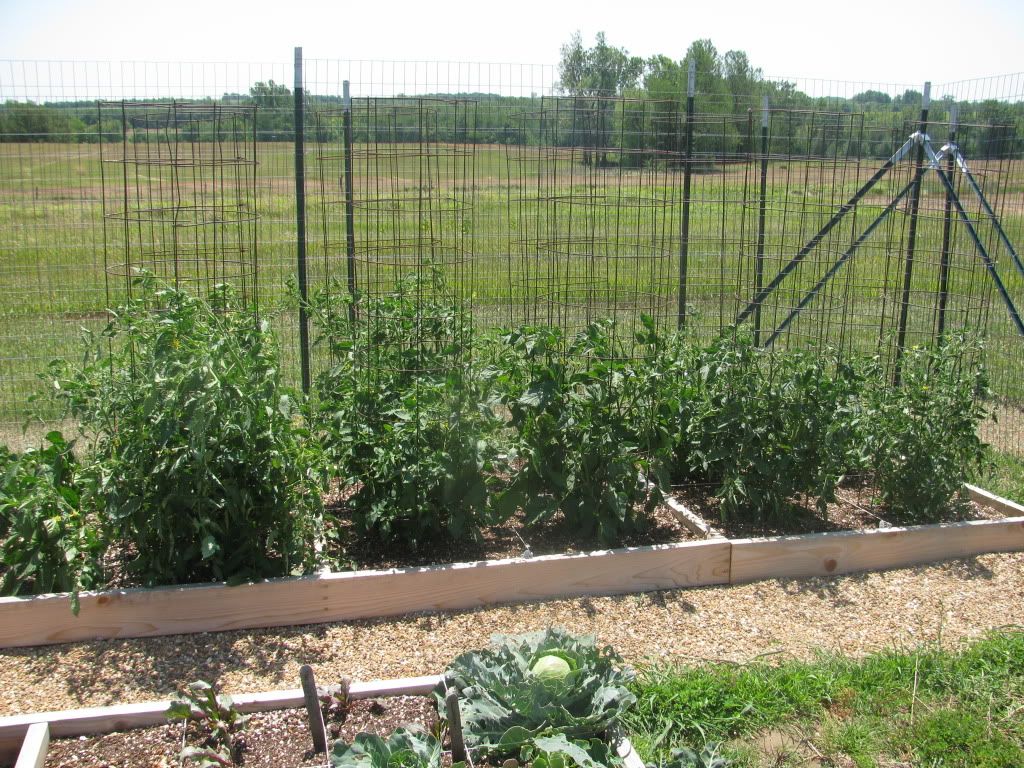

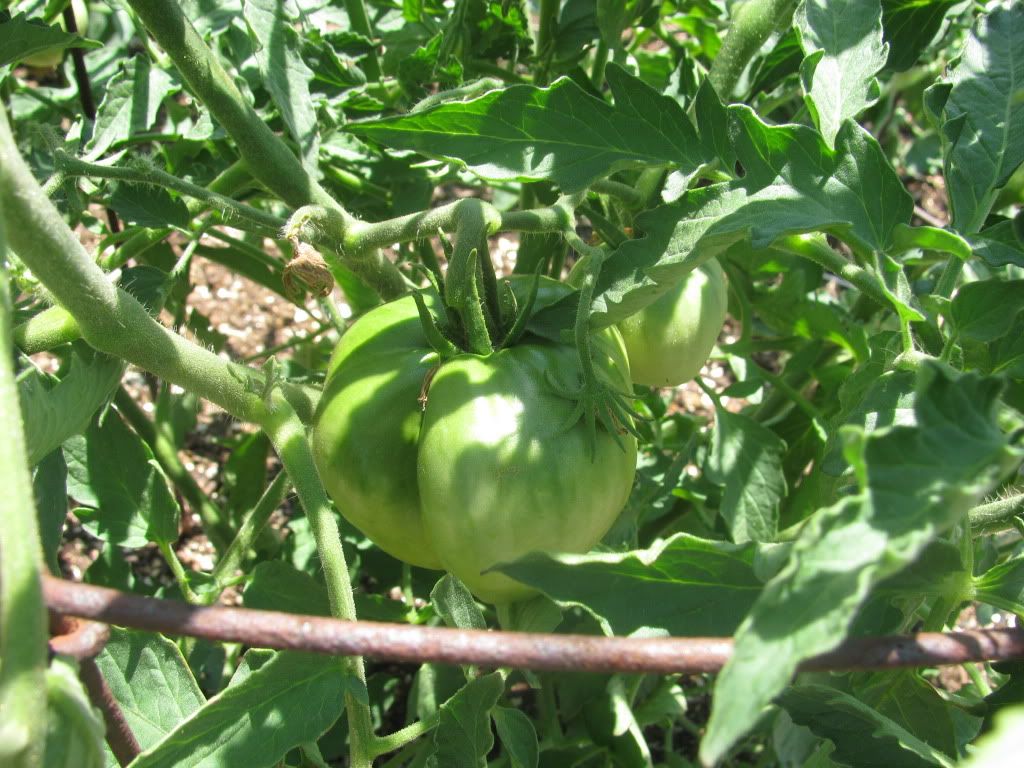
Lots of varieties of heirloom tomatoes


Ripen already!! I can't wait for that first homegrown tomato of 2012.
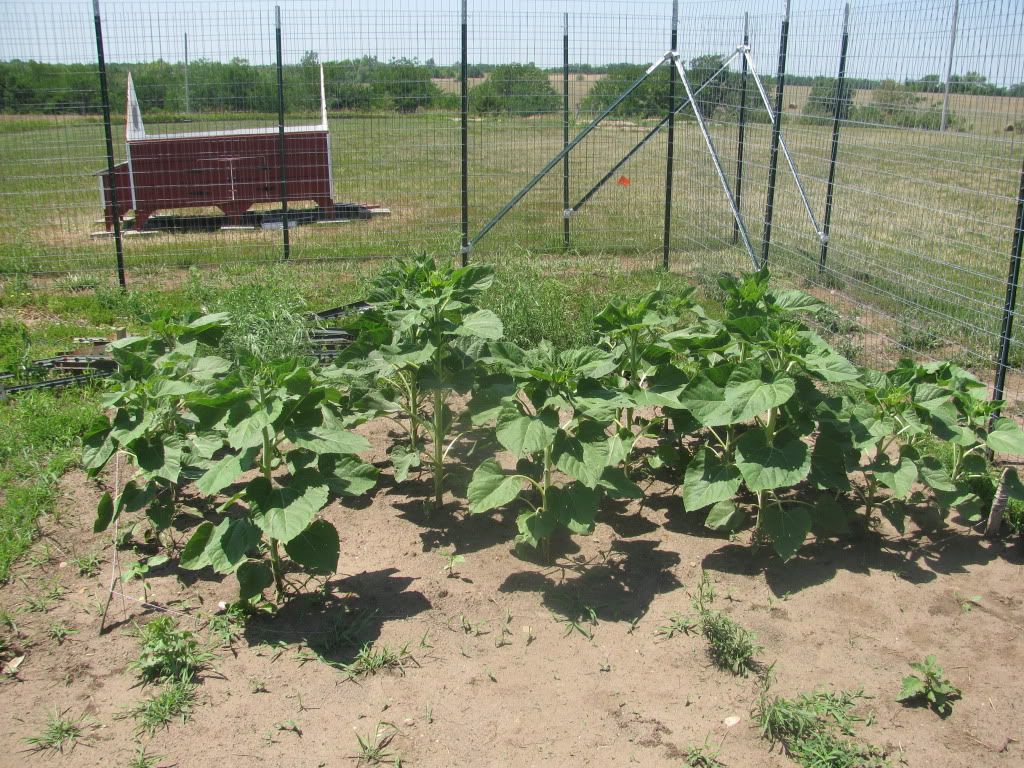


We planted some black oil sunflowers in this open area

We are growing some Peredovik black oil sunflowers for a treat for our chickens.
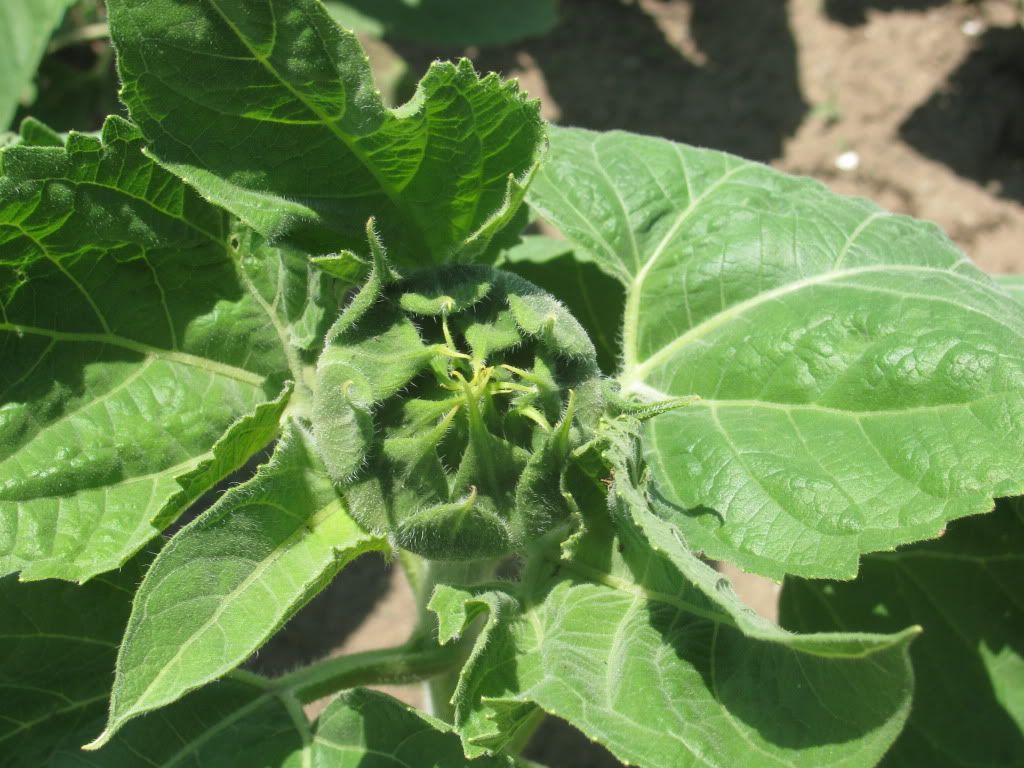

Sunflower bud


The Berries

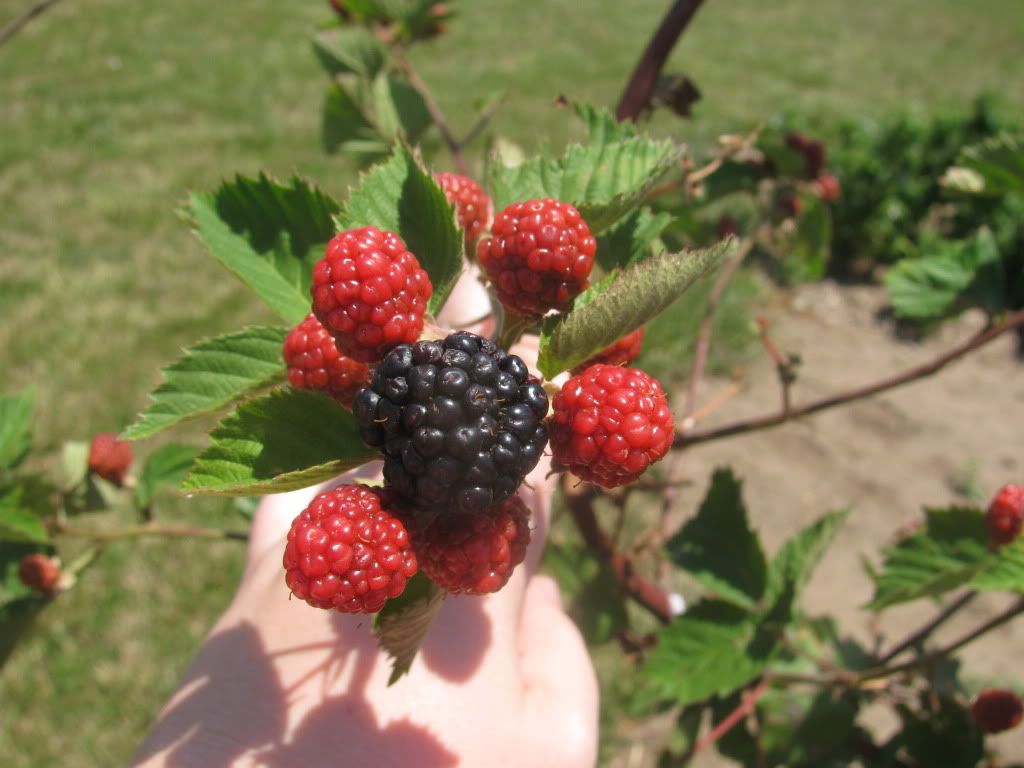
The heat has led the blackberries to begin ripening a full month earlier than last year.
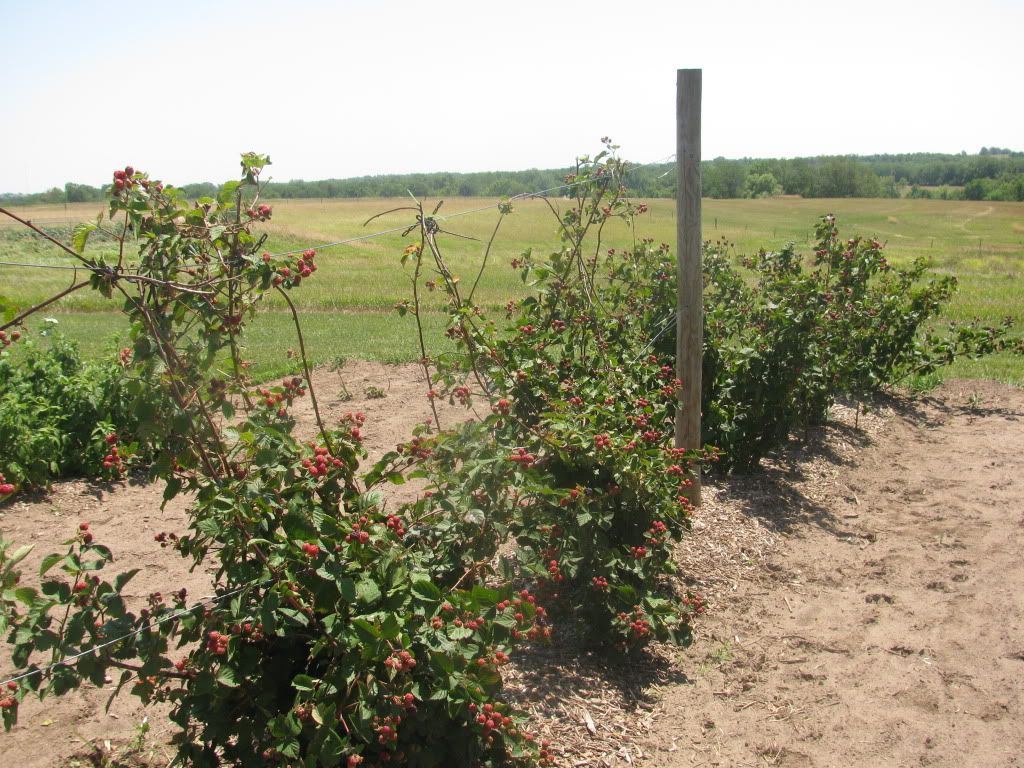


I've only picked enough to eat out of hand, but in the next week or so, we should be harvesting buckets of berries. Time to dig out the canner and make some blackberry jam!
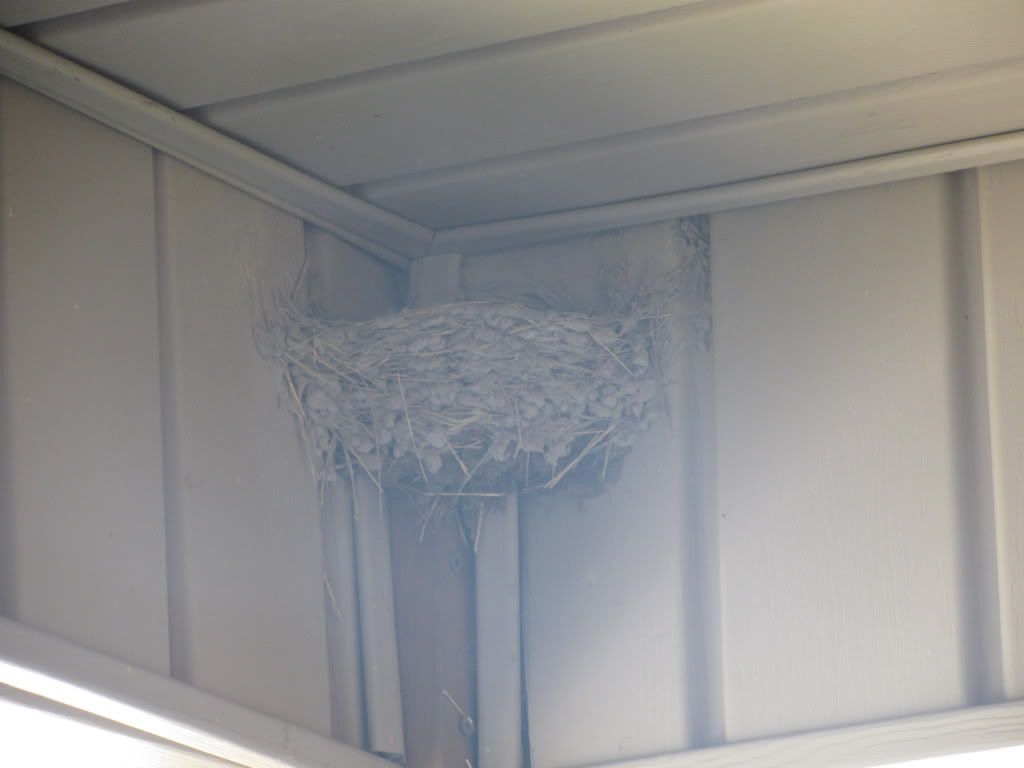


Barn swallow nest

One of the things we are doing to help control the wasps that plagued our blackberries last year is allow barn swallows to nest on our property. We had been knocking down the nests simply because the birds make such a mess on our porches and deck. Barn swallows eat an amazing amount of insects, however, so we are leaving them alone this year. Hopefully this will cut down on the wasps sucking the juice out of my berries!

We're getting a few strawberries from our everbearing plants and little bits of raspberries, too, though our big raspberry harvest will be in September. Or August, the way things are going this year!
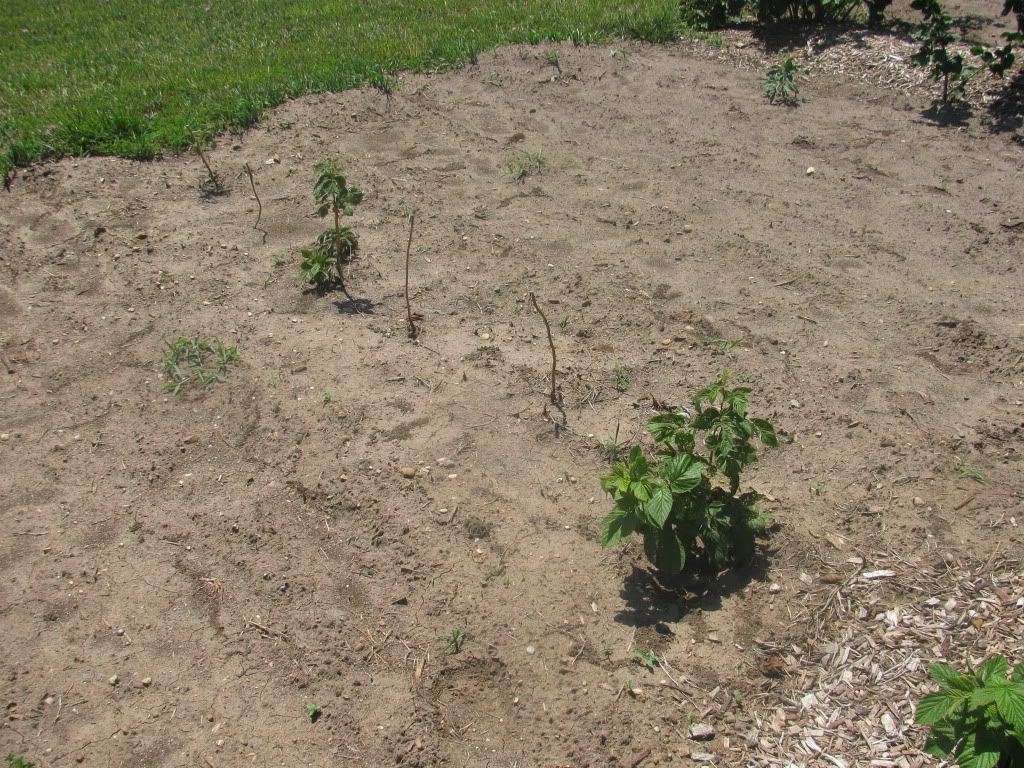
Only about half of the new raspberries appear to have survived

The good news about the raspberry canes we planted this spring is that we have a few survivors. Hopefully they will make it through the heat of summer and we can fill in the row with extra canes from our established raspberries.
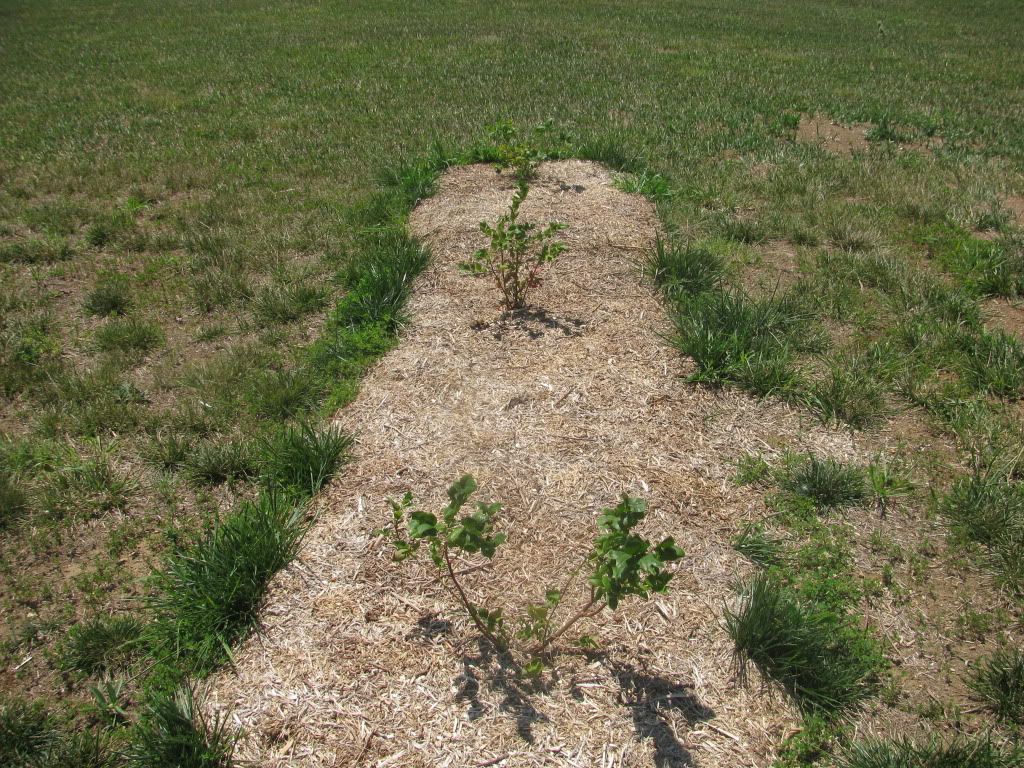

Blueberries going strong

Our blueberry bushes seem to be doing well and they've grown quite a bit. We planted two year old bushes, so hopefully we'll get a crop from them next year.

The Orchard

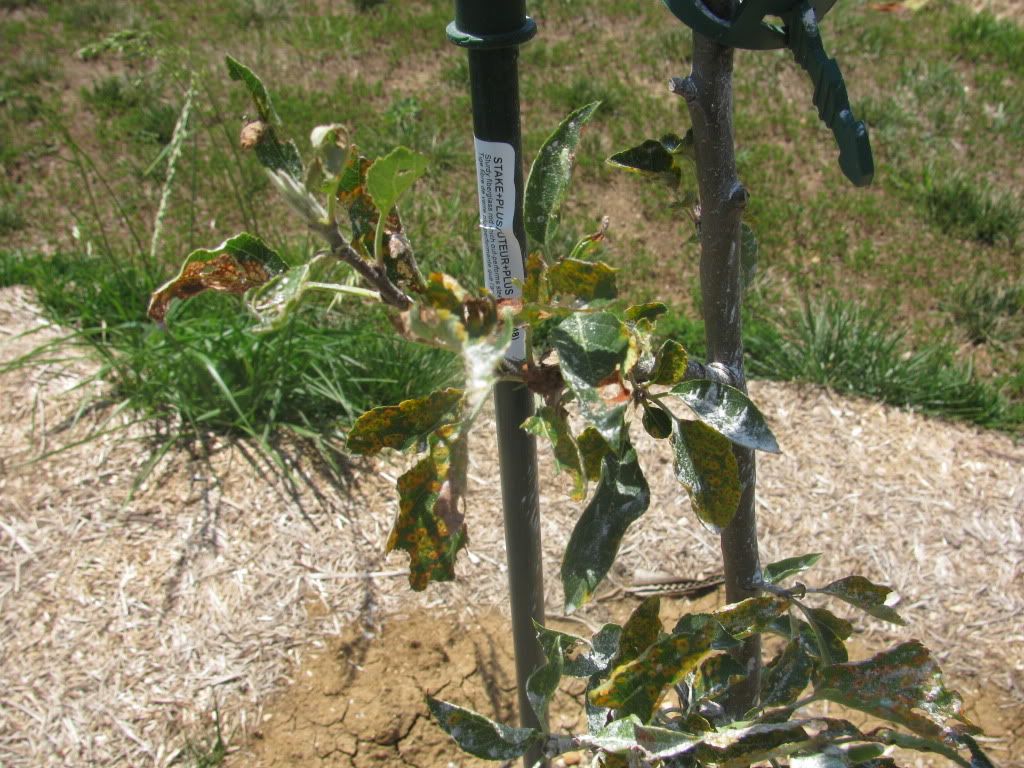
Our little orchard faced some struggles this month. Two of our newly-planted apple trees came down with a bad case of Cedar Apple Rust. 
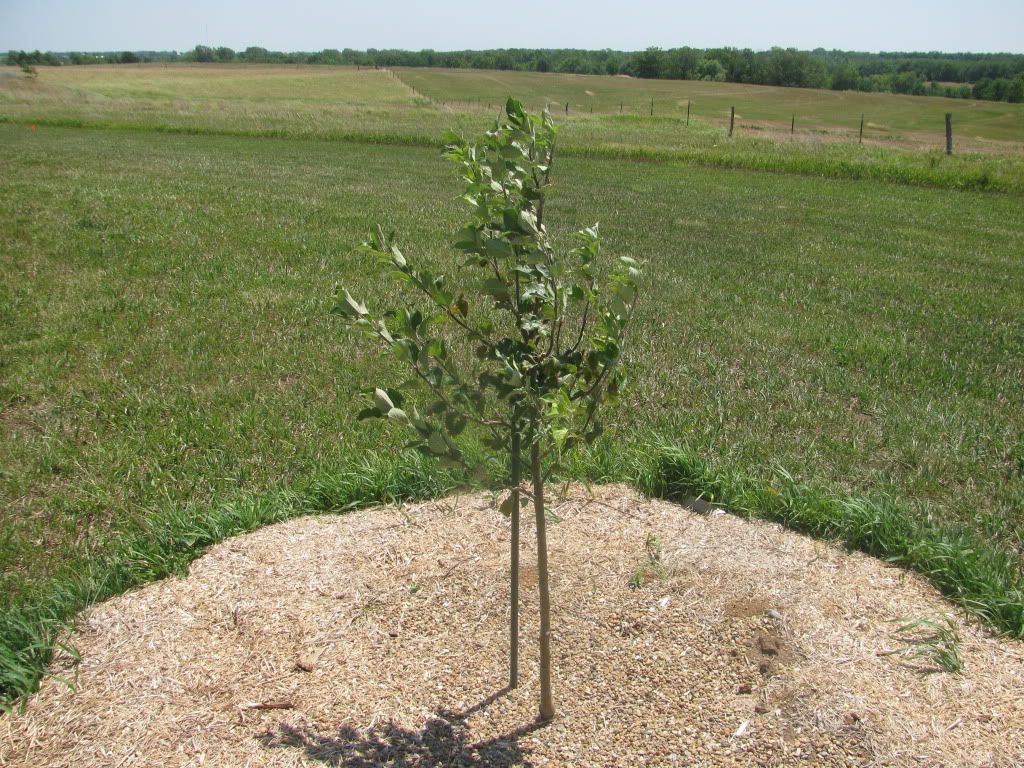
Our Jonafree apple tree has managed to overcome the Cedar Apple Rust 

The GoldRush? Not so much. It's growth is being stunted by its struggle with rust.

I really didn't think we'd have to worry about disease pressures this early! And I didn't think Cedar Apple Rust would be a problem since we don't have any cedar trees on our property.
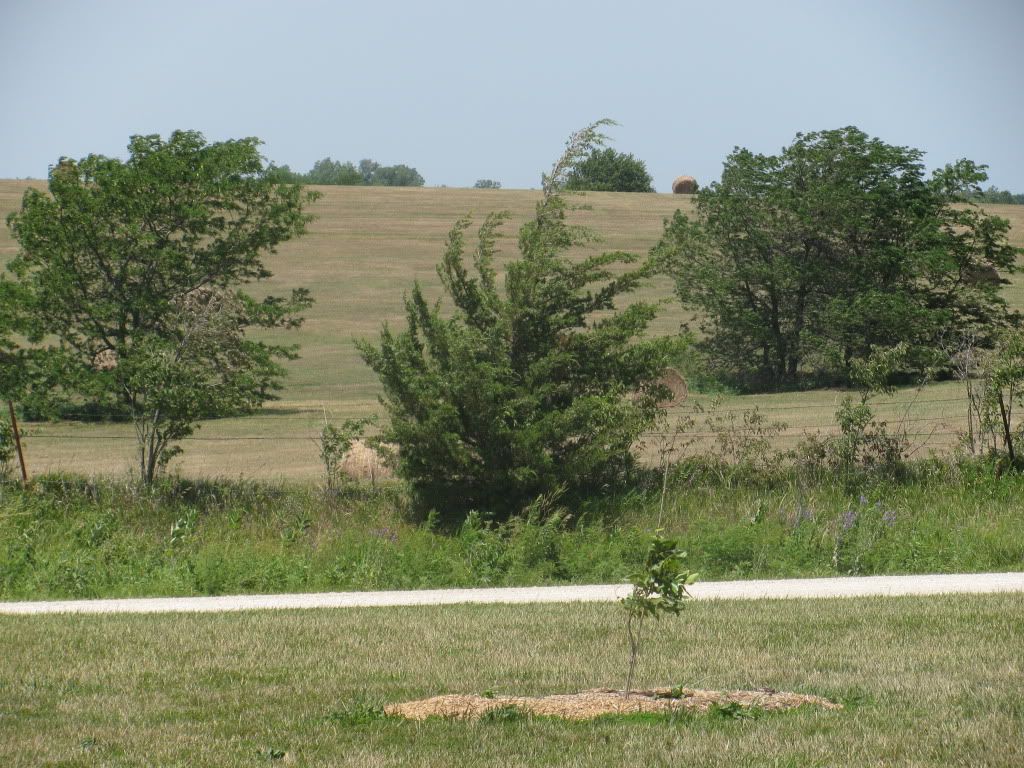

What's that right across the road from our orchard?


Earth to Emily! There are cedar trees right across the road! After I did more research, I found out that to eradicate the chance of Cedar Apple Rust, I'd have to get rid of all the cedar trees within a square MILE of our property. As that's not going to happen, I'm going to have to pay close attention to the weather conditions next spring so I can stay ahead of the rust. In the mean time, I have been using an organic disease control spray that seems to be helping somewhat.
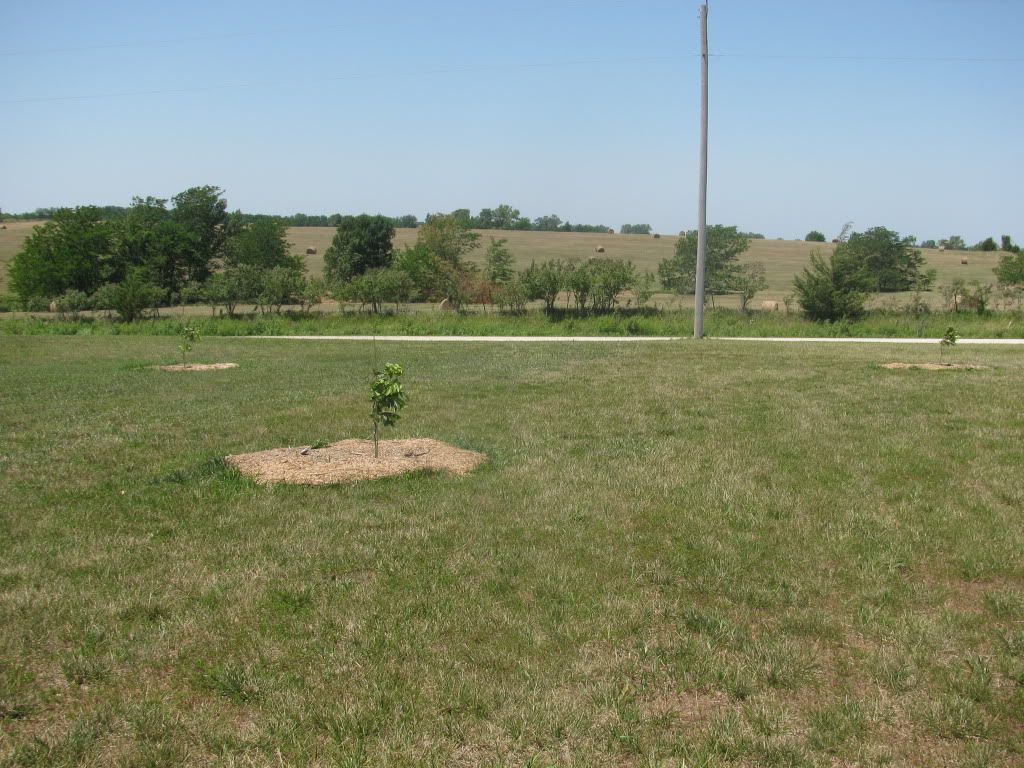
Our pecan trees

Perhaps the most impressive growth has been from our three pecan trees. They might not look so impressive to you, but considering they were mere twigs when we planted them last November, I'm pleased.

Oh, but I'm forgetting the real star of the show, our cherry tree.
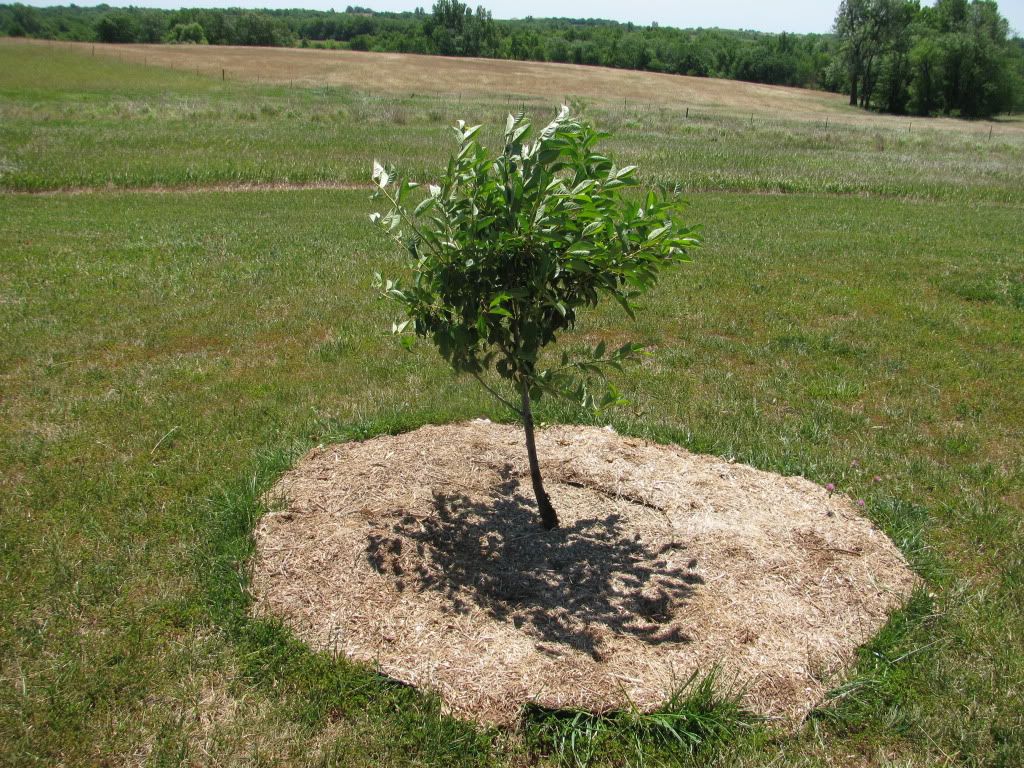
Our not-quite-as-dwarf Montmorency cherry

We got this tree for free four years ago and have pretty much neglected it. This year we have lavished it with care. It got a proper mulching, fertilization, and holistic sprays in the spring. It has responded with enthusiastic growth of nearly two feet!

I also pre-ordered the new additions to our orchard for the fall - two standard-sized pear trees (Starking Delicious and Seckel) and an All-in-One Almond tree. I was really tempted to order a lot more but I remember how hard Hubby Dear and I have to work to bust through our concrete soil. Three trees at a time is probably all we can handle.


Between the garden and my poultry projects, we've been busy. What's growing at your house? 


Saturday, December 3, 2011

November in Review and December Preps

I hope you all had a lovely Thanksgiving and have your Christmas preparations well under way. I am about 3/4 of the way done with my Christmas shopping, though I avoided the complete madness of Black Friday. Hubby Dear and I stayed at home in our pajamas and did our shopping online. We may not have bought any waffle irons for $2, but we stayed safe and sane, thank you very much!

November in  review:

1. Gardening
  • We planted 1 lb of garlic cloves and mulched heavily over the top. Hopefully they will survive the winter depredations of field mice and emerge in the spring. We cleaned up all the garden debris and have everything clean and ready for spring plantings. 
  • We finalized our plans for a survival orchard and planted three pecan trees. 
  • Hubby Dear went through his garden journal and tallied up the final harvest totals. We learned a lot this year and I'll be sharing this information with you in a future post. 
  • We have a tentative plan for next year's garden. We're expanding our garden yet again, which means we'll be building yet more square foot boxes. 

Finally! Some cauliflower! The heads were small but very tasty.

2. Food Storage

I hope this captures some of the beauty of this particularly pretty sunset, despite my lack of camera skills! 

December Preps:

  • My major goal this month is to finalize my year's supply of long term food storage items. I need to go over our inventory and see if there are gaps. I think we are complete other than in dry milk.
  • I need to pre-order my chicks to be delivered in March! 
  • My Christmas present to myself is the mack daddy chicken coop that will be delivered in January. I can't wait to share it with you all. 

That's it for me. Are you gifting yourself or others with any preparedness items? If so, please share in the comments. 


Thursday, November 17, 2011

The Birth of our Survival Orchard: Planting Pecan Trees


We began our survival orchard by planting pecan trees.Why pecans? I'm glad you asked! I think nuts are really important survival foods because of their protein and fat content. We are at the northern most part of the country where pecans can survive, which violates my principle of choosing only trees that are unfailingly hardy in our area. Walnuts (among other nut trees) would have been a better choice.

Well, Hubby Dear detests walnuts and most other nuts besides pecans. As I needed his help planting and maintaining the trees, pecans it would have to be. Besides, I spent a couple of years of my life living in the midst of a pecan grove down in Louisiana and I have been a fan ever since of the graceful, productive pecan tree. We chose the most cold-hardy varieties we could find (Starking Hardy Giant, Stark Surecrop, and Colby) and are crossing our fingers that they like our chilly hilltop homestead.

How could I resist the opportunity to have my own mini pecan grove?
Image from pawpaw.kysu.edu

The other issue with pecan trees is that they take a long time to bear fruit. It can be anywhere from 5-12 years to get a crop of pecans and 20 years for a pecan tree to reach its full size (and they do get BIG). Pecan trees grown in containers tend to transplant better than bare-root trees and grafted pecan trees tend to produce nuts earlier, so keep that in mind if you're looking to add one or more of these fruitful giants to your landscape. And don't make the mistake that we did. We procrastinated and did not place our order for special "Select" pecan trees from Stark Bros. until they had already been for sale for two weeks. By the time we placed our order, they were sold out of Select trees and we had to settle for the runts of the litter. Our procrastination cost us at least two additional years before we'll see nuts.


A view of the southwest corner of our property

Pecan trees get large, but luckily we have lots of space to fill. They need to be about 40' apart and well away from any power lines. We selected this space at the southwest corner of our 5 acres. We decided to be responsible citizens for a change and call to get our utility lines marked before we planted the trees. Hubby Dear gave a very specific description of the area we would be digging in when he filled out the online form for One Call:

"DIG AREA WILL BE ON THE SOUTHWEST PORTION OF THE PROPERTY, IN AN 80 FT X 80 FT AREA FROM A LINE CONNECTING THE ELECTRICITY POLE TO THE SOUTH FENCE, GOING EAST."

Seems straightforward to me.


I'm glad to know my backyard is OK... 

Apparently not. This is what ended up getting marked - the area between our house and the chicken moat! Oh well. At least we were able to scavenge the flags the doofus left behind to mark the spots where we wanted to plant each tree.

We crossed our fingers that we wouldn't hit anything, marked out positions for the three trees and got to work. Thankfully we had gotten 3-1/2 inches of precipitation over the previous week and it served to loosen things up slightly.

See the line of demarcation between topsoil and clay?

I have a long history of bemoaning our poor soil. I was surprised to find that this portion of our property actually has several inches of topsoil. This is MUCH better than in our backyard garden area. I was excited to find lots of earthworms as we dug.

One hole down...

The goal is to get a hole that is roughly 2' across and 2' deep. We dug down to 18" pretty easily, but past that point the clay was impenetrable to our shovels. Oh well, it would just have to do!

We took the topsoil and the best bits of the clay and mixed it in a wheelbarrow with some peat moss and compost. We used this mixture to fill in the holes. The addition of peat moss and compost  will help loosen things up a bit for the trees. The trees themselves were tiny and came in 4"x10" pots. By the time they grow enough that their root systems fill the hole we dug, they should be strong enough to contend with the unamended soil that surrounds the place they were planted. That's the theory, anyway!


Our teeny tiny Colby pecan tree. Don't be fooled by the much larger bamboo support stake!

We tamped down the soil mix tightly around the tree, eliminating air pockets that could cause the tree to dry out and die. Then we watered, watered, watered. Pecan trees really need a lot of water but unfortunately, these trees are far away from any faucet or hose. I'm comforting myself by the thought that lugging 5 gallon buckets of water around all summer is sure to build up my biceps.

We used some of the most dense pieces of clay to create small berms around the planting site. They work nicely to keep water around the trees and prevent it from running off downhill before it can soak in.


Stark Surecrop Pecan Tree with Typar weedcloth circle and mulch

The next step was to lay a circle of landscape fabric around each tree and cover it with several inches of mulch. This will help to retain soil moisture and make mowing and trimming easier.


The finished product. As you can tell, it took us all afternoon to complete the job. 

The final step was to place a tree guard around each tree. Tree guards are white plastic coils that protect trees both from rodent damage and sunscald.

That's it! Hopefully the little trees will thrive and grace us with beauty, shade, and lots of pecans.